





Wall Hooks: How to Choose for Entryways, Mudrooms, and Bathrooms
Wall hooks are one of the small specifications that organize a whole room — entryway, mudroom, bathroom, kid's bedroom, kitchen pegboard wall, the back of a passage door. The right hook in the right place earns its keep daily; the wrong one becomes the thing nobody uses. This guide covers five categories of wall hook worth knowing about — multi-hook racks, sculptural single hooks, minimal architectural hooks, hanging-rod systems, and hand-finished textured pieces — and how to choose between them for the way each room actually gets used.
How do I choose the right wall hook?
Three questions are worth asking before specifying. First — how many things does this hook need to hold, and how often? An entryway in a four-person household needs different capacity than a single hook by a guest bathroom door. Second — how visible is the hook when nothing is hanging from it? An empty hook is a small piece of wall sculpture; a sculptural hook earns its visual weight, while a minimal hook recedes when not in use. Third — what's the substrate, and is the hook strong enough for what it'll carry? Wet coats are heavy; tote bags loaded with groceries can run to 30 pounds; a single sand-cast brass piece will hold all of that, while a delicate decorative hook is best reserved for hats and lightweight items. For more on installing hooks across substrates — drywall, plaster, brick, tile — see our guide to installing on walls.
How many wall hooks do I need?
For an entryway, plan two hooks per regular household member at minimum — one for an everyday coat, one for a bag, scarf, or backup outerwear. A four-person household needs at least eight hooks at the front entry, and probably more if children are still in the layered-everything phase of life. For a mudroom serving the same household, double that figure to account for seasonal gear (rain jackets, ski gear, dog leashes, sports bags). For a guest bathroom or powder room, two hooks suffice — one for a hand towel, one for a robe or jacket.
Spacing matters as much as count: hooks need approximately 6–8 inches of horizontal clearance between centers for a coat to hang without overlapping its neighbour. Pack hooks tighter than that and the lower hooks become unusable when the upper ones are loaded. Children's hooks can be closer together — kids' coats are smaller, and kids tend to use the same hook every day regardless.
Five categories of wall hook, and where each works
Hooks below are organized by *function and visual weight* rather than by manufacturer. Each category solves a slightly different specification problem — picking the right category usually matters more than picking the right specific product within it.
Multi-Hook Racks: The Catch-All
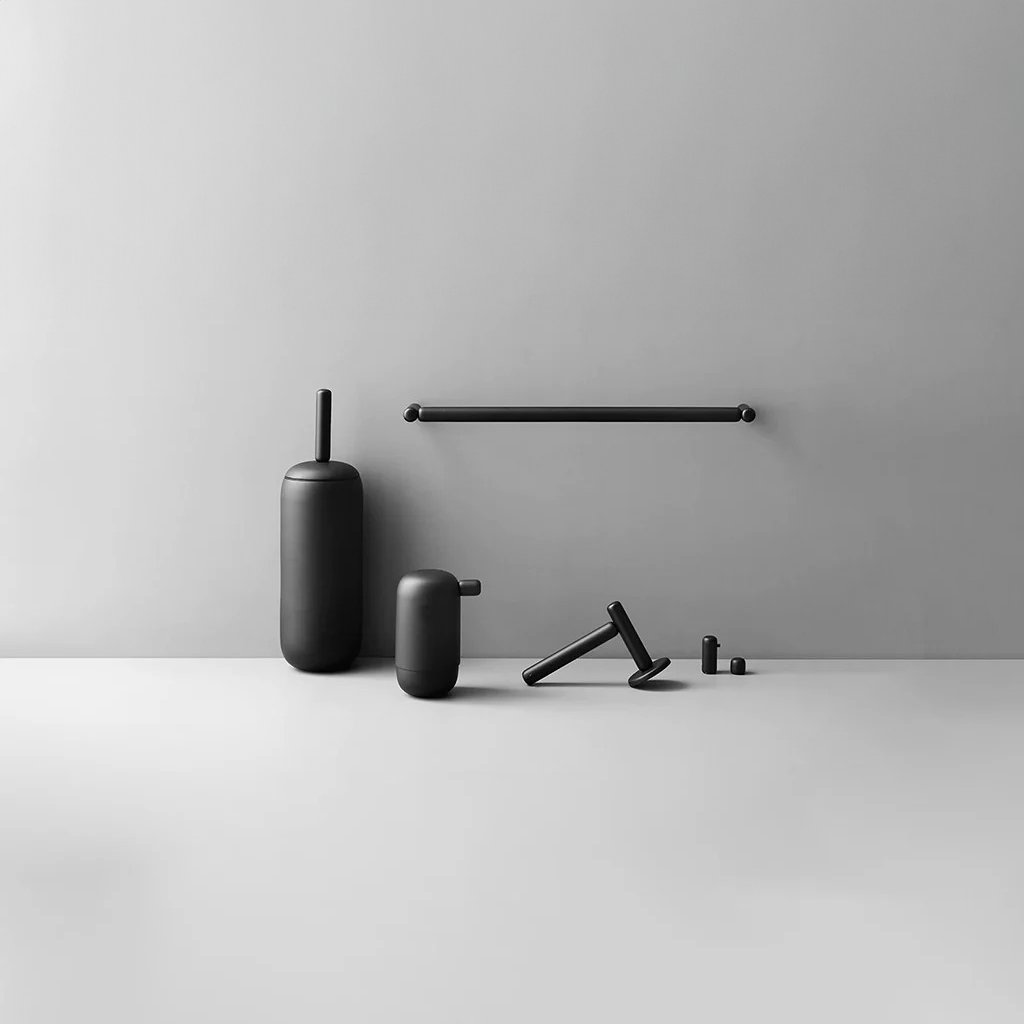
For high-capacity, single-installation entryways where one piece needs to do all the work. The Afteroom Coat Hanger by Menu is the reference object here: a Bauhaus-inflected rack with six flat circular heads, mountable horizontally or vertically, with all mounting screws hidden for a clean architectural read. Made of powder-coated zinc alloy in black, white, or brass (special order), with a smaller version available for tight spaces. Use a single Afteroom in a small foyer or kid's room where multiple hooks need to live in a coordinated piece; use the larger version horizontally as the primary entryway storage moment.
View the Afteroom Coat Hanger
Sculptural Singles: The Jewel
For entryways or rooms where the hook itself is part of the design — a small piece of wall jewellery that reads as decorative when nothing's hanging from it. The Chanterelle Hook by Ferm Living, designed by jewellery designer Helena Rohner, is the strongest example: organic lines, available in nickel and brass, sculpted to look like an object rather than a fitting. Pair with the smaller Mushroom Hook from the same line for a constellation effect, or use a single Chanterelle as a discreet accent. Both hooks also function as cabinet or drawer pulls — useful when a kitchen or bath wants the same design language carried across hardware types.
View the Chanterelle Hook
Architectural Minimal: Charlie by CBH
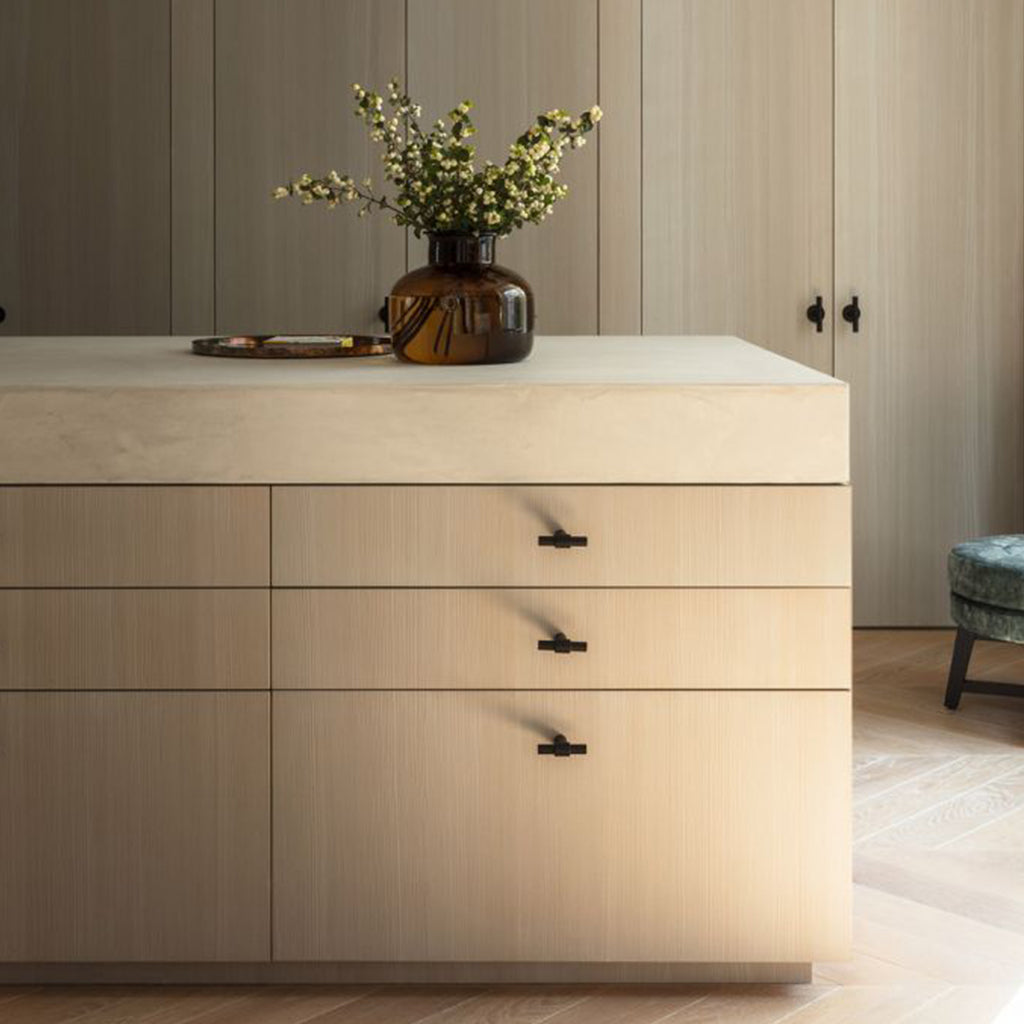
For projects where the hook needs to coordinate with a broader architectural hardware program. The Charlie collection by Toronto-based CBH includes eight hook variants — the slender Pencil Hook for narrow spaces, the chunky Angular Hook for heavy coats, the semi-circular Round Hook for playful entryways, the discreet Wedge Hook for under-shelf installations, plus Nail, Bumper, Single, and standard variants. All are made in Canada, available in CBH's full finish range, and designed to coordinate with Charlie cabinet hardware, door levers, and grab bars across a project. Specify when the hook is one piece of a larger architectural hardware brief rather than a standalone moment.
Browse the Charlie Collection
Hanging Rods: The Rack Approach
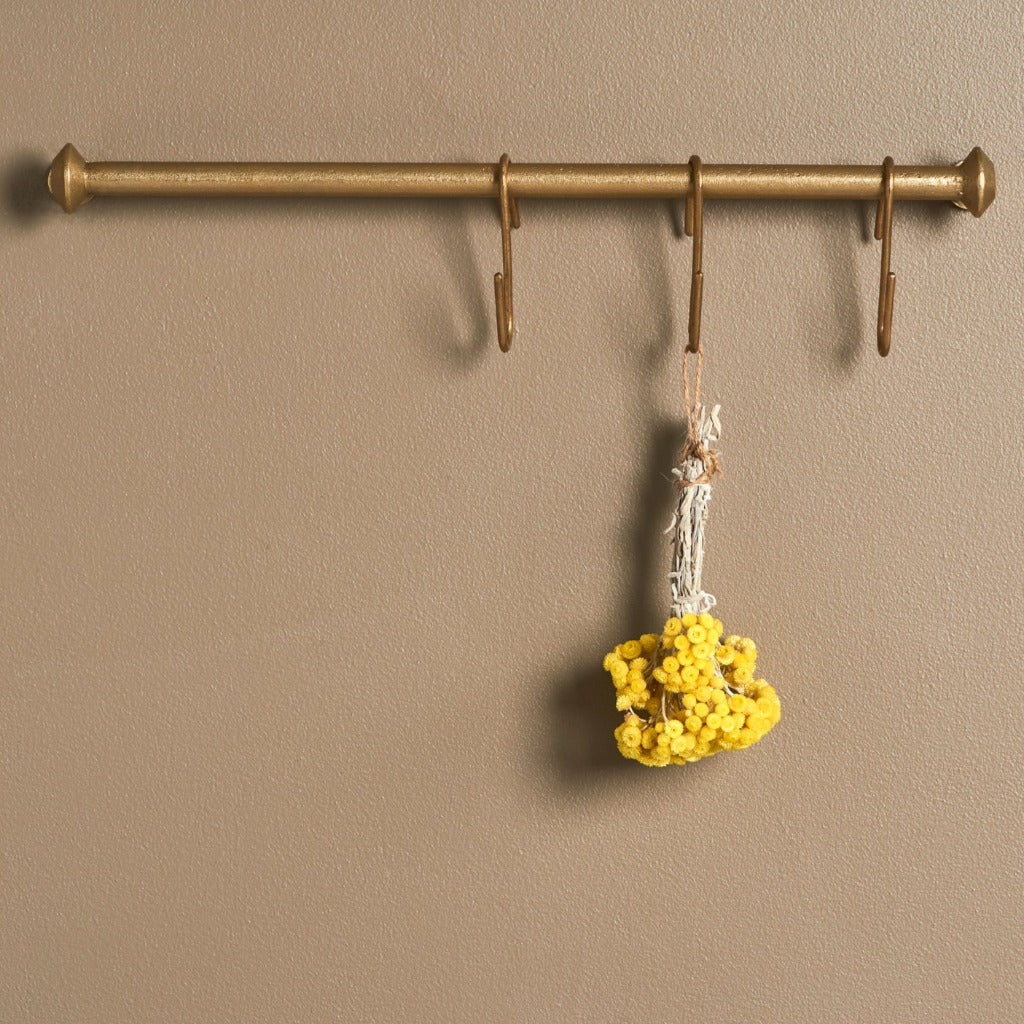
For situations where a single rod with movable S-hooks suits the use better than fixed hooks — kitchens with open shelving, mudrooms where bags and coats rotate seasonally, the back of a passage door where projection depth matters. The Pyra Hanging Rack by Toronto designer Shayne Fox is hand-crafted in unlacquered brass, made to order, mountable directly to a shelf or to the wall via the Pyra wall plate — a touchable, eclectic piece that ages into a living finish over time. The Ferm Kitchen Rod is the more affordable equivalent: six closed-loop S-hooks, available in brass or black, rated for up to 11 pounds. Both work better than fixed hooks in narrow hallways or behind doors, where projection matters more than visual presence.
View the Pyra Hanging Rack
Hand-Finished Textured: Mi & Gei
For projects where the hook is unambiguously functional art — sand-cast brass and nickel pieces with hand-honed surfaces that read as objects worth touching. The Libre Forme series from Mi & Gei runs from the small No. 4 (a tactile nugget good for lightweight items) through the art-deco-inflected No. 5, the open-circle No. 7, the architectural No. 6, and the heavy-duty arched No. 9. All are unlacquered — the brass and nickel will patina with use as living finishes. Specify a single piece as an accent in an under-utilized space, or three in a row as a guest entryway moment where the hooks are part of what greets visitors.
Browse Mi & Gei
Where should wall hooks be installed?
Standard adult coat-hook height is 60–66 inches above the floor — high enough that a hung coat clears the ground, low enough that average-height adults can reach the hook without stretching. Children's hooks should drop to 36–48 inches depending on the age of the child; a hook the kid can't actually reach gets used by adults instead, defeating its purpose.
For mudrooms with multiple users, install at two heights — adult hooks at 60–66 inches, children's hooks at 36–48 inches, with the rows offset horizontally so coats don't collide vertically. For guest bathrooms, a single hook at 60–66 inches suffices for a robe, with a second hook 12 inches lower for hand towels if needed.
Substrate matters: most decorative hooks are rated for drywall installation with appropriate anchors, but heavy-use entryway hooks should be mounted into wall studs whenever possible. Plaster walls (older homes) and brick or masonry walls (commercial fit-outs) require specific anchor systems — covered in detail in our guide to installing on walls. For sand-cast or solid-metal hooks like Mi & Gei or Pyra, stud mounting is non-optional.
What's the strongest wall hook for heavy items?
Solid-metal hooks installed into wall studs. The Charlie Angular Hook (chunky double hook, made of solid brass), the Mi & Gei Libre Forme No. 9 (heavy-duty arched piece), and the Pyra Hanging Rack (made-to-order brass) all hold substantial weight when properly mounted — heavy winter coats, loaded tote bags, dog leashes with leashed dog still attached. Avoid decorative or hollow hooks for heavy loads, and avoid drywall-anchored installations for anything that gets tugged daily — the anchor will eventually loosen, even when the hook itself is rated for the weight.
Browse the full hooks and racks collection, or get in touch about specifying for a project. For a related conversation on living finishes that age beautifully — relevant to Mi & Gei and Pyra specifically — see Hardware Finishes Part Two. For everyday-use brass care, see Hardware Finishes Part One.
Leave a comment