





Ceiling Light Fixtures: How to Choose by Room
A pendant hung at the wrong height makes a kitchen feel awkward, a dining room feel cluttered, and an ambient lamp feel like a task light. Most of the rules that prevent this come down to a handful of measurements. This guide covers the ones we get asked about most.

What size pendant do I need over a kitchen island?
Two formulas, both useful. Measure the width of the island and subtract 12 inches — that gives you the maximum total width of all your fixtures combined. So a 36-inch-wide island can carry up to 24 inches of pendant width, which means two 12-inch pendants. The second method: measure the length of the island and pick fixtures with a diameter no larger than 25% of that length. A 60-inch island would take pendants up to 15 inches across.
The two methods rarely give the same answer, which is fine — they're guidelines, not rules. Use them to stay in the right range, then trust your eye for the final call.
How many pendants should I hang over an island?
Two pendants for islands under six feet long. Three for islands above six feet. Larger pendants count for more visual weight, so above a six-foot island you'd hang either three small pendants (under 10 inches) or two larger ones (15 to 18 inches). A single statement fixture also works — sized at no more than two-thirds the island's length.
How far apart should pendants be spaced?
Eighteen inches minimum between any two pendants, regardless of size. For pendants smaller than 18 inches in diameter, that 18-inch gap is enough. For larger pendants — over 18 inches — increase the gap to match the diameter: two 24-inch pendants need 24 inches between them.
At the ends of the island, leave a gap at least half the diameter of the pendant. For pendants under 10 inches, leave 12 inches at each end so the run doesn't feel crowded.
What size pendant fits a dining table?
Half to two-thirds the width of the table. A 60-inch round table takes a 30-to-40-inch fixture. The pendant should always be centred over the table, not over the centre of the room — if the table moves, the pendant moves with it. Reinstalling a pendant is a small electrical job and worth doing.
What size pendant works for a living room?
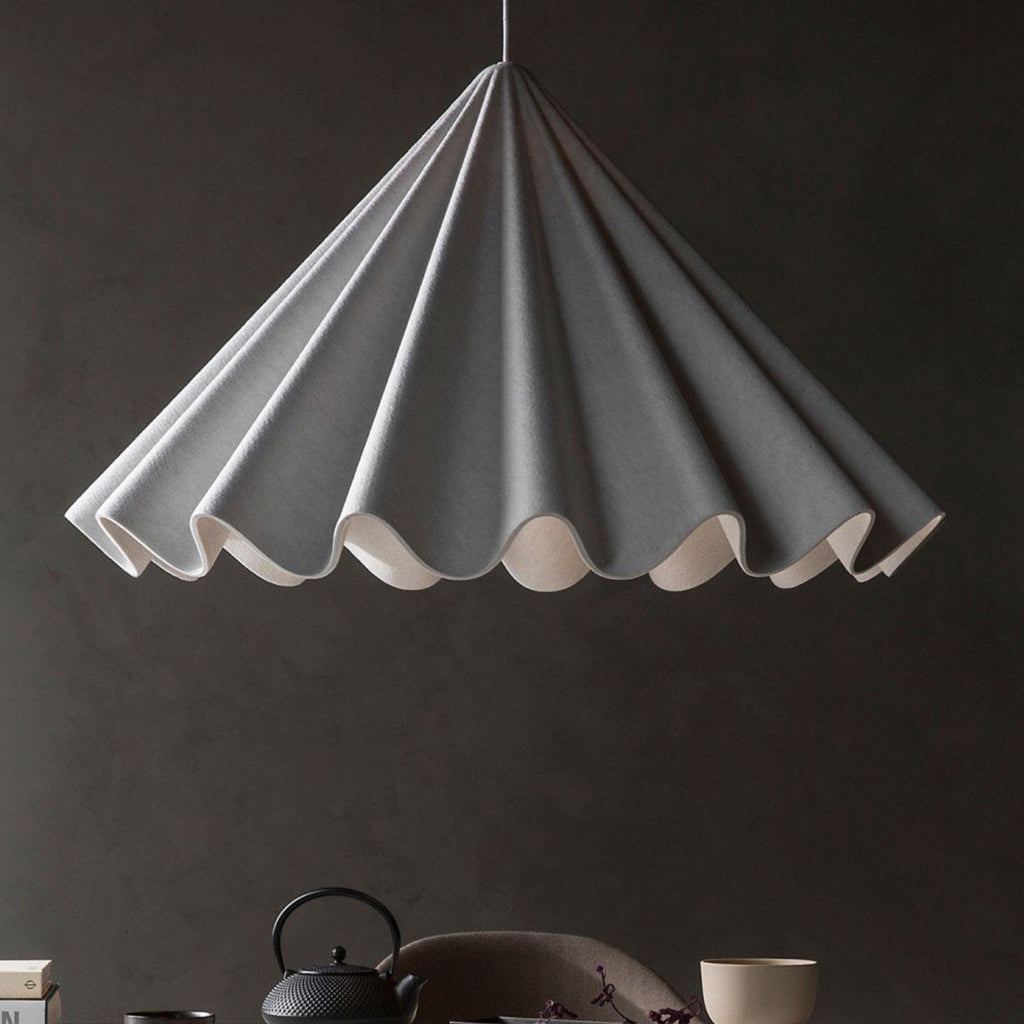
For ambient lighting in a living or sitting room, add the room's width and length in feet, then convert that number to inches — that's a reasonable starting diameter. A 10-by-15 foot room sums to 25 feet, which suggests a pendant around 25 inches across. The number is a guide, not a target; a slightly smaller fixture in a room with low ceilings, or a larger one as a deliberate statement, both work.
How high should I hang a ceiling light?
Leave at least one foot of clearance between the bottom of the pendant and anyone standing or sitting underneath. As a starting point, a pendant should hang 12 to 20 inches below an 8-foot ceiling — the longer drop suits a coffee table or dining table, the shorter drop suits anywhere people will be standing. For every additional foot of ceiling height, add 3 inches to the drop. A 10-foot ceiling brings the recommended range to 18 to 26 inches below the ceiling.
Can I break these rules?
Yes — but commit. The rules above produce reliably good results for the same reason all design rules do: they describe what most rooms need most of the time. Breaking them works when the break is decisive. A pendant that's slightly too large reads as a mistake; a pendant that's clearly oversized reads as intentional. The same applies to asymmetry, off-centre placement, and unconventional pairings. Half-measures look like accidents.
For more on placement specifically, see our guide to pendant lights. Browse the full range in the ceiling lighting collection.


Leave a comment