





Hardware Finishes: Stainless Steel
Stainless steel has been a fixture in design for over a century — found anywhere durability, hygiene, and quiet visual presence matter at the same time. It's the metal of choice for surgical instruments, commercial kitchens, marine fittings, and increasingly, the hardware specified on serious residential and commercial projects. This guide explains what it is, why it works, and where it belongs in a hardware specification.
What is stainless steel?
Stainless steel is an iron alloy containing at least 10.5% chromium, the element responsible for its corrosion resistance. The chromium reacts with oxygen at the surface to form a thin, invisible passive layer of chromium oxide that prevents rust and most chemical attack — and that re-forms automatically if the surface is scratched. This self-healing behaviour is what makes stainless steel stainless; ordinary steel rusts because it has no such layer.
Beyond the basic chromium content, stainless steel comes in dozens of grades, each tuned to specific environments. Two are most relevant to hardware:
Grade 304 — the most common stainless steel in residential and commercial fittings. Suitable for indoor use, hygienic environments, and most kitchen and bath applications. The default for hardware unless conditions demand more.
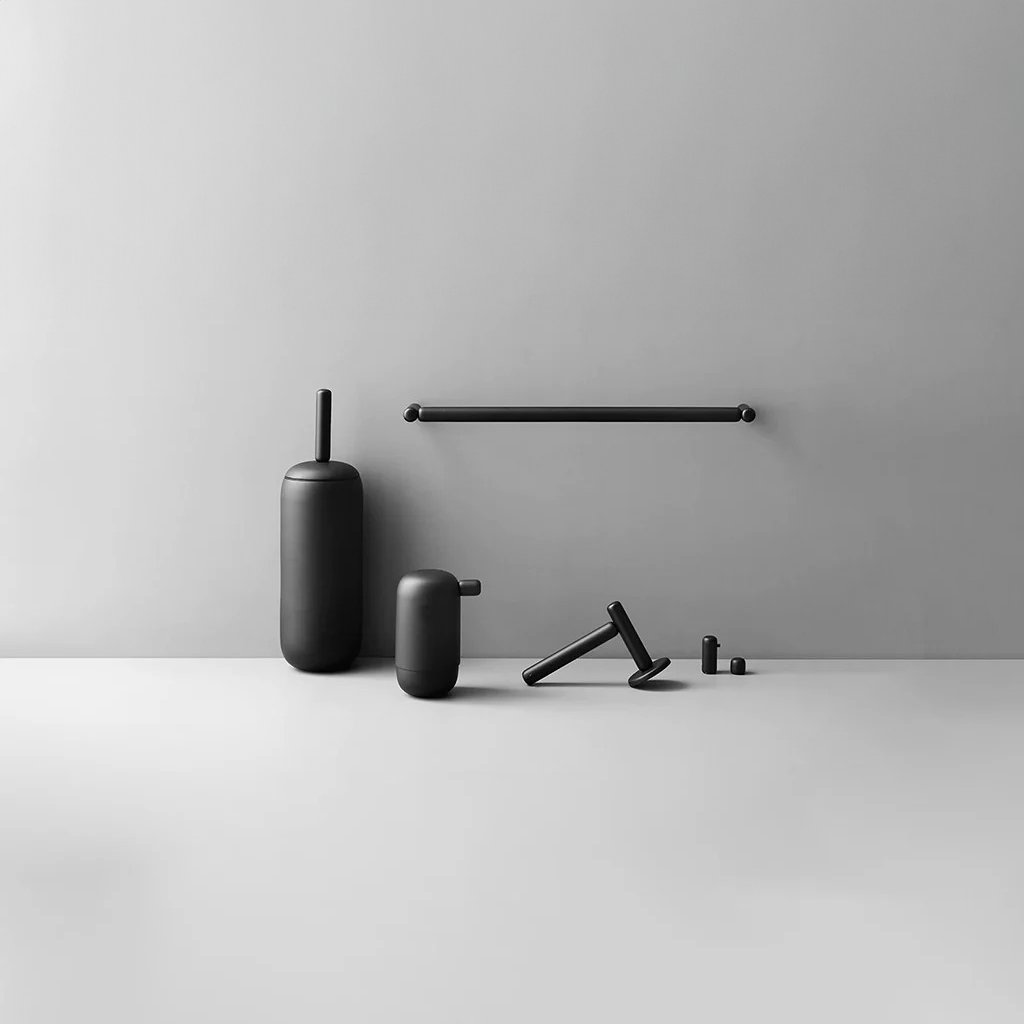
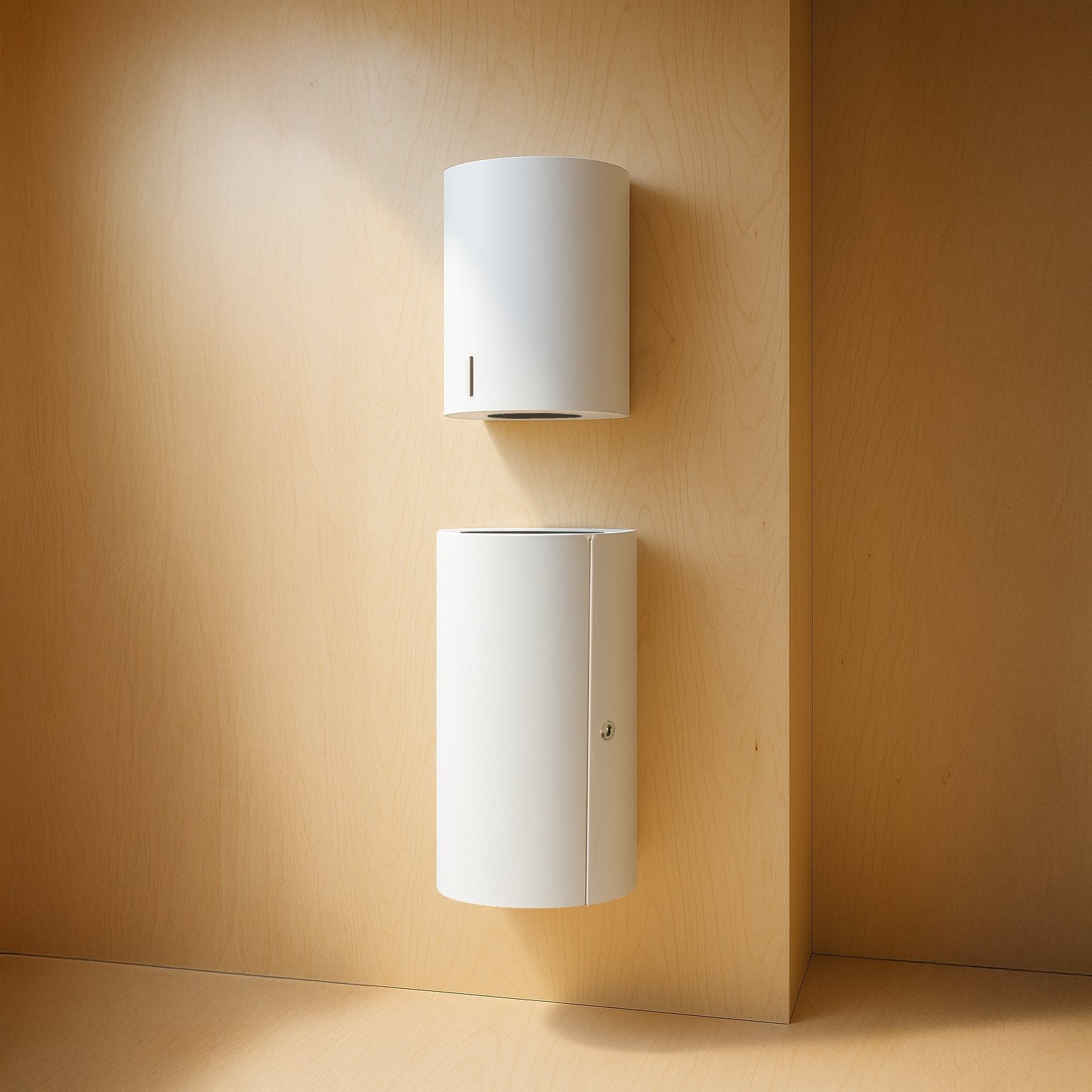
Grade 316 (marine grade) — adds molybdenum to resist chloride corrosion from salt air, swimming pools, harsh cleaning chemicals, and seawater. Specified for coastal architecture, pool hardware, hospital washrooms, and any commercial bathware likely to encounter aggressive cleaners. The d line Qtoo collection is built in marine-grade 316 for exactly this reason — it's bathware engineered to perform in the most demanding settings.
Why is stainless steel resistant to corrosion?
Because of the passive chromium oxide layer at the surface. Most metals corrode because oxygen penetrates the surface and reacts with the metal beneath, forming rust or other oxides that flake away and expose more material to attack. Stainless steel inverts that process — its oxide layer forms first, only a few atoms thick, and acts as a barrier preventing further oxidation. If the layer is damaged by a scratch or impact, fresh chromium reacts with the air to rebuild it within seconds.
This is why stainless steel handles acids, industrial cleaners, salt water, humidity, and temperature extremes that destroy other metals. Brass, copper, and bronze develop their own oxide layers (the patinas described in our Living Finishes guide) but those layers are visible and aesthetic. Stainless steel's protective layer is invisible by design, which is why the surface stays bright and unchanged across decades of use.
Why is stainless steel used in kitchens and hospitals?
Hygiene. The same non-porous surface that resists corrosion also resists bacterial colonization — there are no microscopic pits or grain structures for microbes to hide in, and the surface can be cleaned aggressively without degrading. This is why commercial kitchens, operating theatres, food processing facilities, and pharmaceutical labs are fabricated almost entirely in stainless steel. The standard isn't decorative; it's a measurable property of the material.
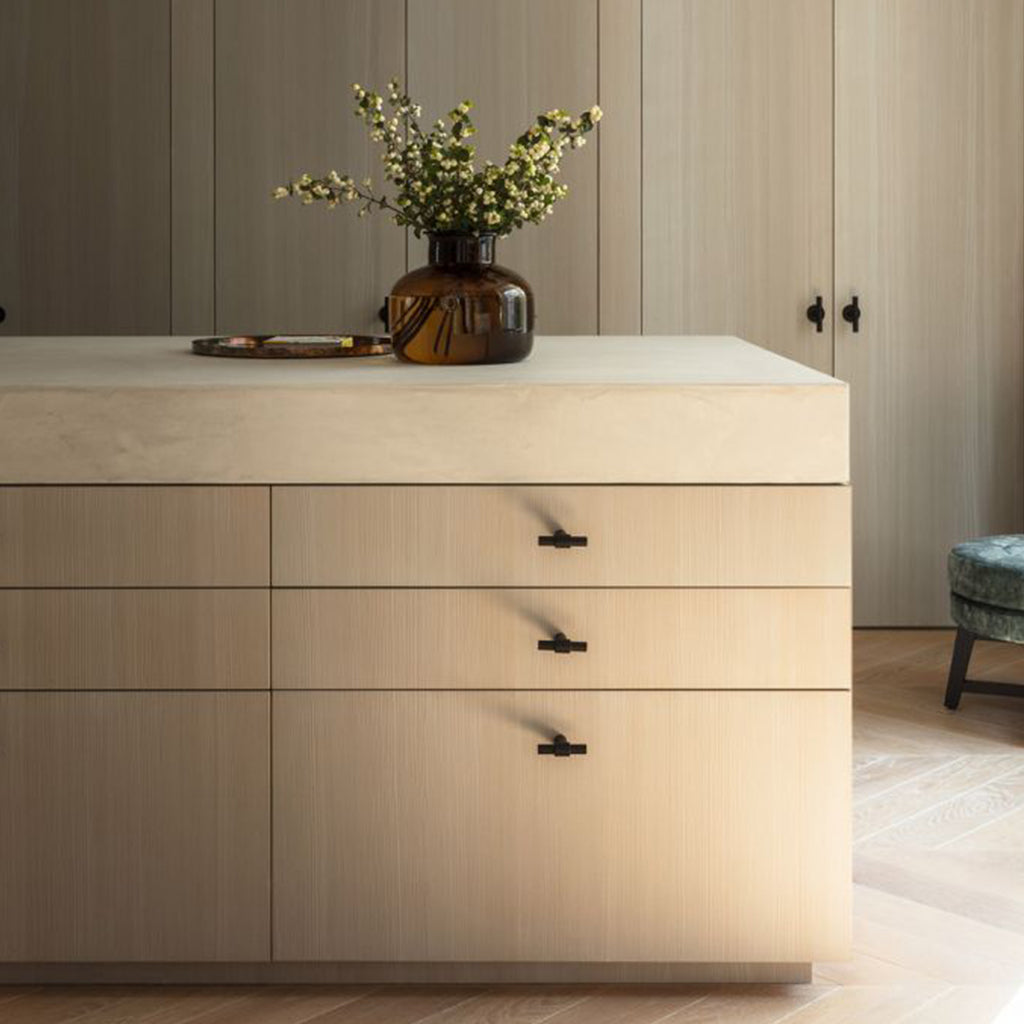
For hardware specifically, stainless can be finished with antimicrobial coatings that take this further — adding ionic silver or copper into the surface treatment to actively inhibit bacterial growth. Casson's Cubo cabinet pull from d line is available with an antimicrobial option, as is the Charlie collection by CBH. These are specified frequently for healthcare, education, and hospitality projects where hygiene is part of the design brief.
Is stainless steel sustainable?
Yes — and meaningfully so. Approximately 70% of stainless steel produced today contains recycled content, and the material itself is 100% recyclable at end of life with no loss of quality. A stainless steel fitting installed today is likely made partly from steel that was previously something else — a car, an appliance, a building component — and will eventually become something else again.
The sustainability story extends beyond recycling. Stainless steel's durability means installed pieces rarely need replacement: a stainless tap, hook, or pull installed correctly will outlast most of the building it's installed in. The lifecycle environmental impact of a single high-quality fitting kept in service for fifty years is a fraction of that of cheaper hardware replaced every five. This is part of why specifiers working on sustainability-rated projects (LEED, WELL, Living Building Challenge) gravitate toward stainless components.
How long does stainless steel hardware last?
Decades, when specified appropriately. Quality manufacturers warranty stainless steel hardware accordingly — d line offers a 20-year manufacturer's warranty on its products, which is short relative to the actual functional life of the material. With minimal care (a wipe with a soft cloth and water; occasional cleaning with a mild detergent), stainless steel components installed today will function and look essentially the same in fifty years.
The exceptions are environments outside the grade's tolerance — coastal exposure or pool chemistry on grade 304 hardware, for instance, will eventually pit even though the same hardware in grade 316 performs indefinitely. Specifying the right grade for the conditions is the entire game.
Why does stainless steel suit modern design?
Two reasons. First, the material has no inherent decorative quality — it's neither warm nor cold, neither traditional nor obviously contemporary — which lets it sit comfortably alongside almost any other material. Stainless reads as appropriate against marble, oak, plaster, brass, leather, concrete, and tile equally; few other metals do. This neutrality is why architects from the Bauhaus movement onward have used it as a workhorse: it gets out of the way and lets the architecture do the work.
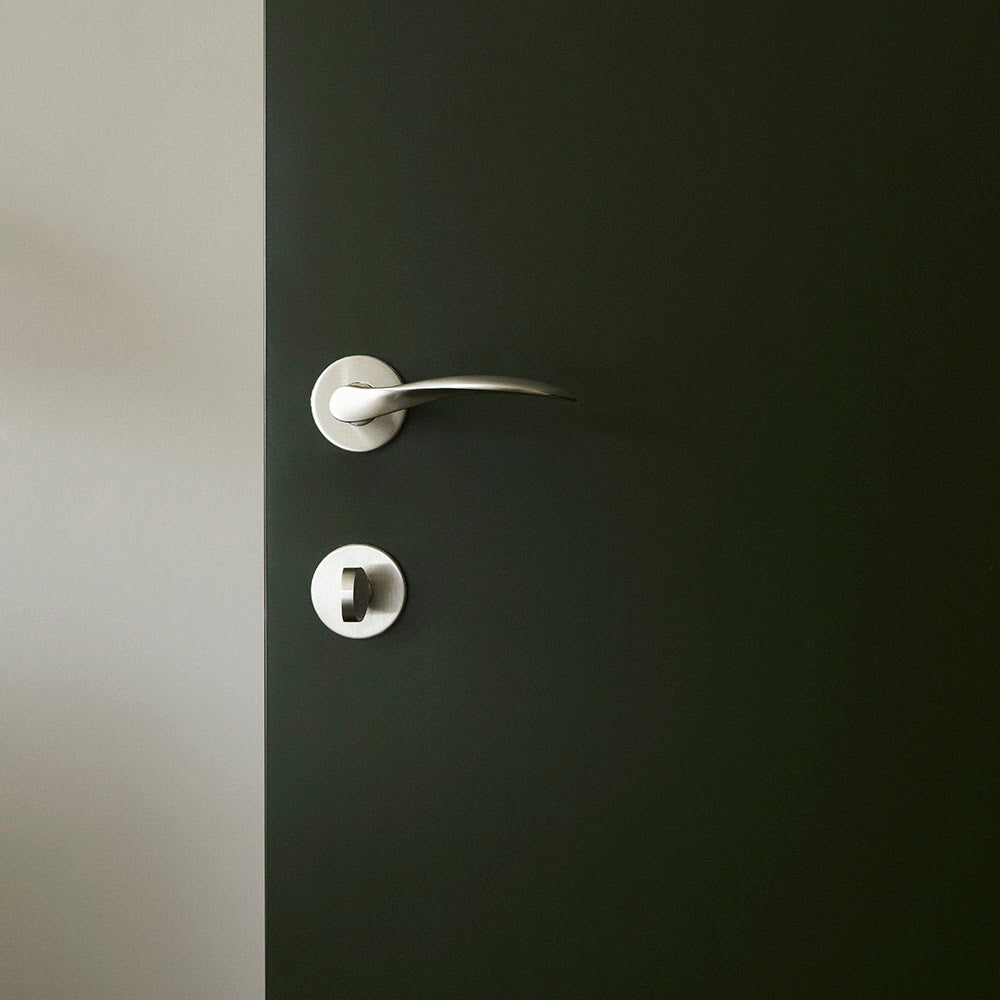
Second, stainless steel takes a wide range of finishes. Polished mirror, satin brushed, matte, sandblasted, vibration-finished, and PVD-coated variants all start from the same base material. The same alloy can be specified to gleam like a chrome reference object or to recede into a wall as a soft matte detail. Designers like Arne Jacobsen built whole architectural languages around this versatility — Jacobsen's stainless steel door levers from d line remain in production over fifty years after their original release, recognizable as Danish modernism but compatible with almost any era.
How do I care for stainless steel hardware?
Wipe regularly with a soft cloth and warm water. For more thorough cleaning, mild detergent diluted in warm water removes most marks; rinse and dry to prevent water spots, especially on polished finishes. Avoid abrasive scrubbers (which scratch the passive layer's surface, even if the material self-heals chemically), bleach-based cleaners (which can pit certain grades), and steel wool (which leaves iron particles on the surface that subsequently rust and discolour the underlying steel).
Brushed and satin finishes are more forgiving than polished — fingerprints and water marks show less, and any cleaning marks tend to blend into the existing grain direction. Always clean along the grain on brushed finishes; cross-grain wiping creates visible streaks.
Stainless steel hardware appears throughout the Casson collection — from Qtoo's marine-grade bathware to Charlie cabinet hardware to architectural fittings across the lighting and electrical ranges. Browse the stainless steel collection to see the material in context.
Leave a comment