






Commercial Bathware: A Specifier's Guide to Dan Dryer, d line, and HEWI
Commercial Bathware — Specifier's Guide
Commercial bathware is the part of a project specifiers tend to inherit from a default. Bobrick, Bradley, ASI — the institutional brands solve the problem competently, and on most jobs that is enough. On projects where the bathroom carries design weight, three European brands are worth knowing instead. This is a guide to Dan Dryer, d line, and HEWI — what each one does, where each one fits, and how to coordinate across all three when a project earns the depth.
What makes commercial bathware different from residential?
Commercial bathware is engineered for use cycles that residential hardware never sees. A hotel guest faucet may run hundreds of times a day. A public-washroom hand dryer runs every minute during peak hours. A grab bar in a healthcare setting is loaded, leaned on, and grabbed thousands of times across its service life.
Three things separate commercial-grade hardware from residential, and all three matter at specification:
Cycle life. Commercial faucet cartridges are rated for 500,000 actuations or more. Residential cartridges typically aren't. The same logic applies to flush valves, soap-pump mechanisms, and hand-dryer motors. When a fixture fails in a hotel washroom or a healthcare bathroom, the cost is not the fixture — it is the service ticket, the downtime, and the guest or patient experience.
Finish durability under aggressive cleaning. Commercial washrooms get cleaned with stronger chemistry than residential bathrooms. Quaternary disinfectants, bleach solutions, alcohol-based sanitizers — these strip lacquer, dull plated finishes, and pit lower-grade stainless steel over time. A finish that holds in a residential bathroom may not hold in a hospitality or healthcare setting.
Accessibility code compliance. Commercial bathrooms in North America must meet ADA requirements (and provincial equivalents in Canada, including the Accessibility for Ontarians with Disabilities Act and Quebec's Code de construction). Grab bars must hold 250 pounds of force in any direction per ANSI A117.1. Mounting heights, reach ranges, and clear-floor-space requirements all govern where and how hardware is installed. Residential hardware rarely carries the same load ratings or compliance documentation.
The institutional defaults — Bobrick, Bradley, ASI — solve all three problems at the lowest credible price point. They are the right specification for many commercial projects. The brands below are the alternative for projects where commercial-grade performance and design quality have to coexist.
Which European brands are worth specifying for design-led commercial projects?
Three brands divide the design-led commercial bathware territory. They divide it not by category but by editorial position — by how each brand approaches the relationship between commercial performance and design.
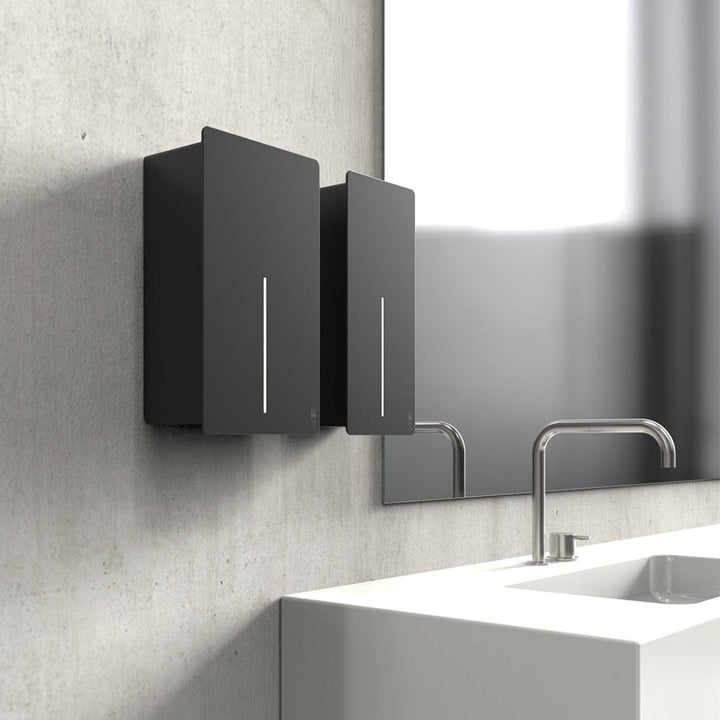
d line holds the minimalist position. The catalogue is tight rather than comprehensive — Knud and Qtoo are the two collections that matter — and the brand's identity is the aesthetic, executed in marine-grade 316 stainless steel.
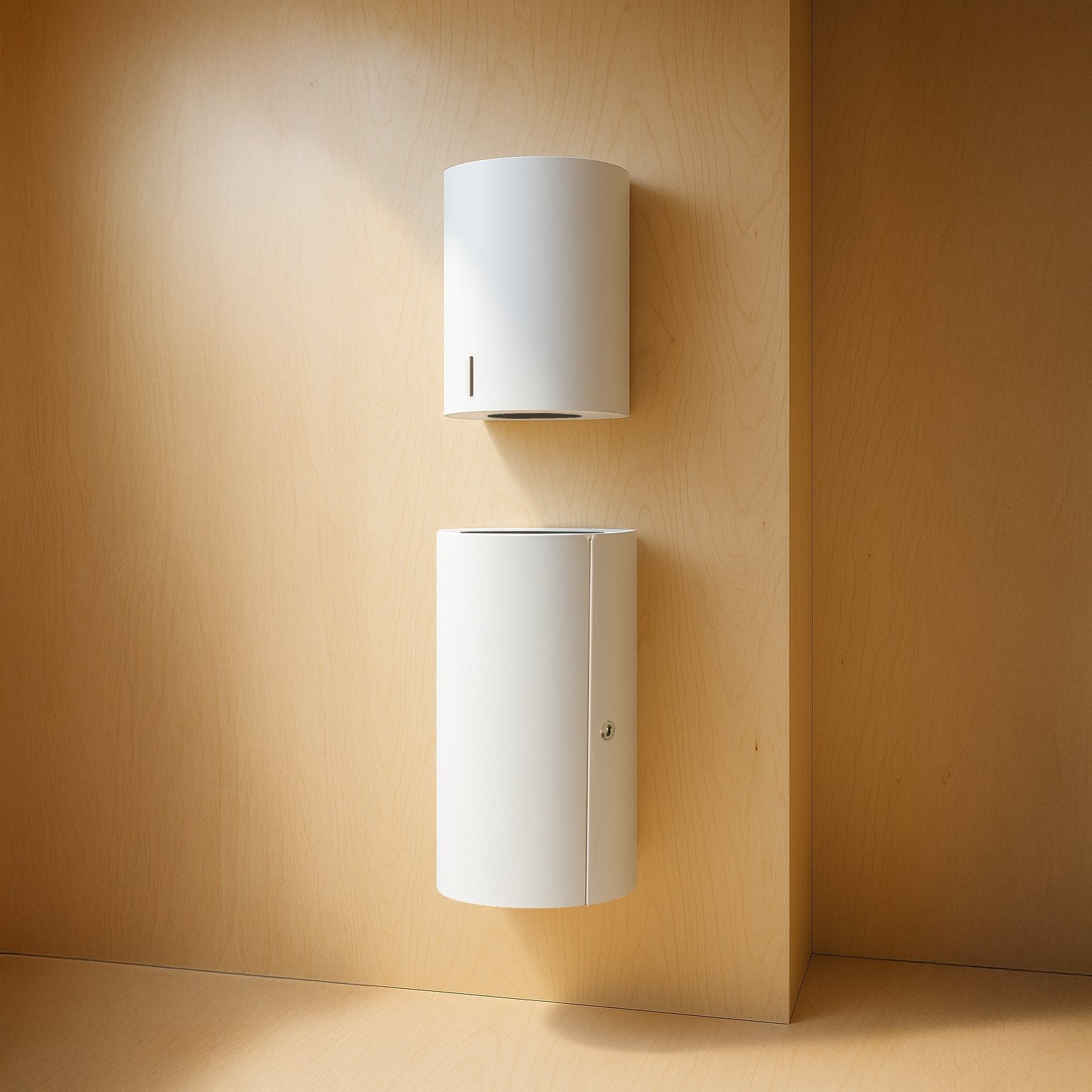
Dan Dryer holds the design-family position. Bjork, LOKI, and Stainless are coherent collections that each offer a complete commercial-bathroom design language, including coordinated air, water, and soap fixtures. Specifying Dan Dryer is specifying a system, not individual pieces.
HEWI holds the depth position. The brand carries an extensive finish range, the broadest accessibility portfolio of the three, and modular system thinking that lets a single brand coordinate hardware across an entire building.
Each is examined in turn below.
What does Dan Dryer offer that other dispenser brands don't?
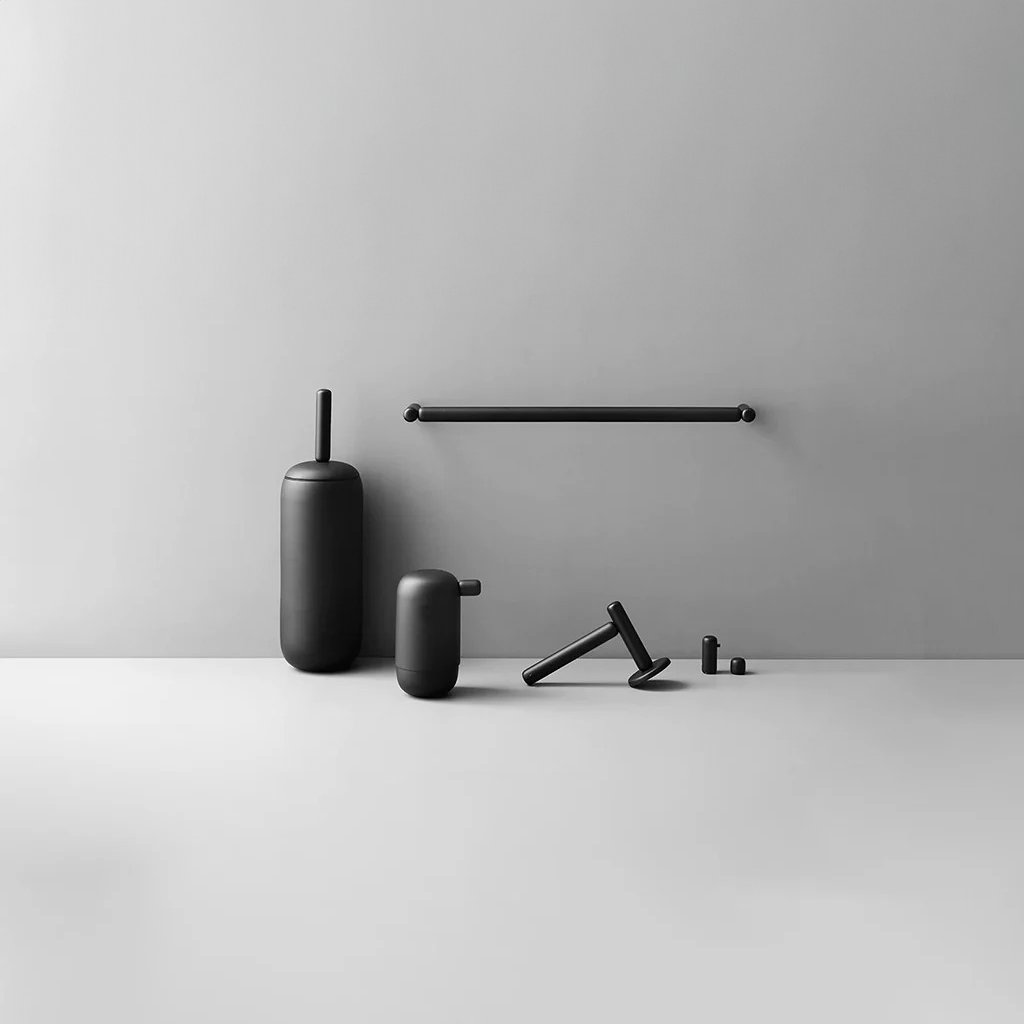
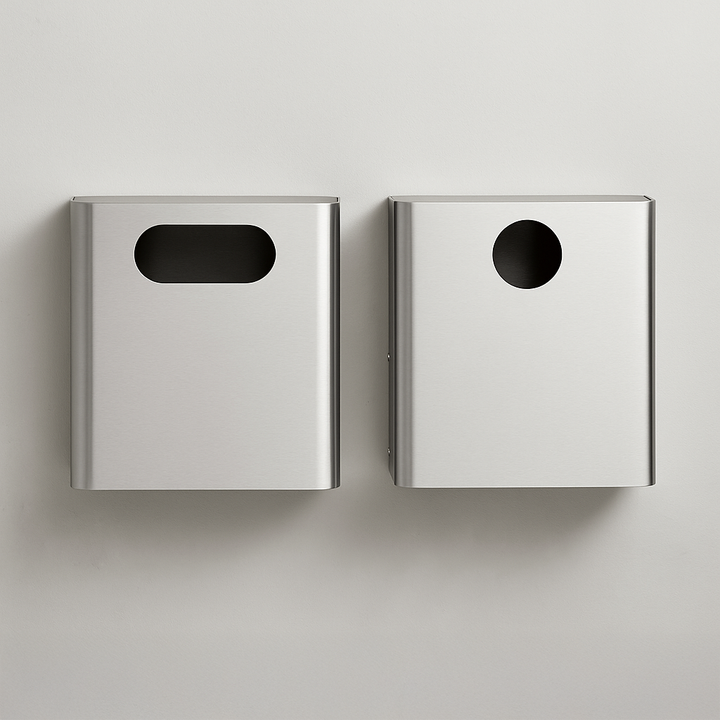
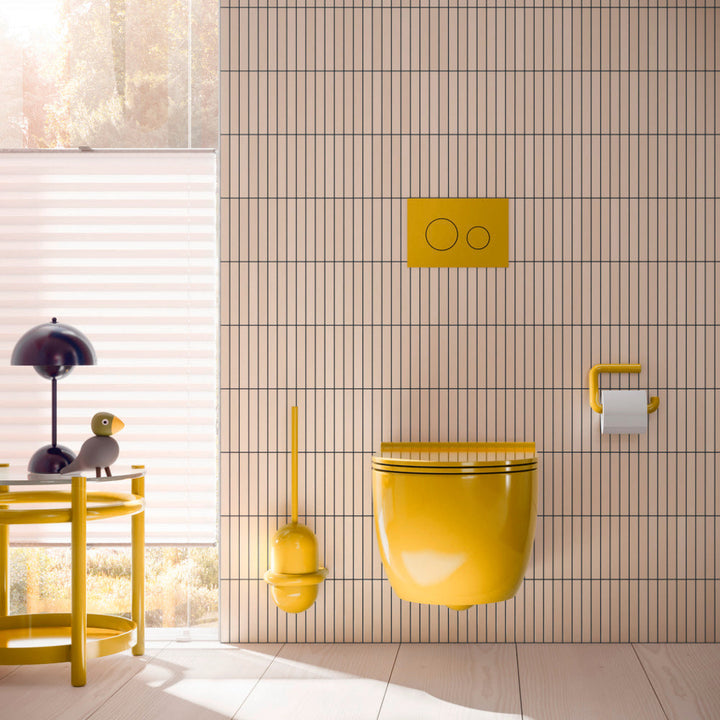
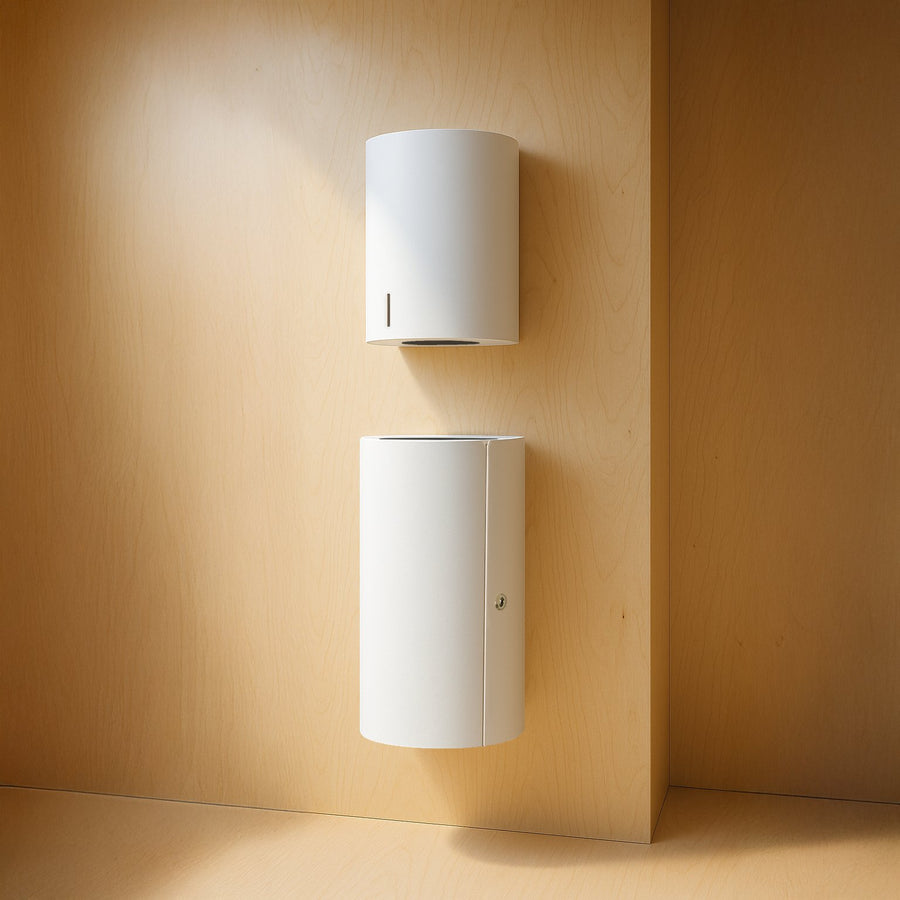
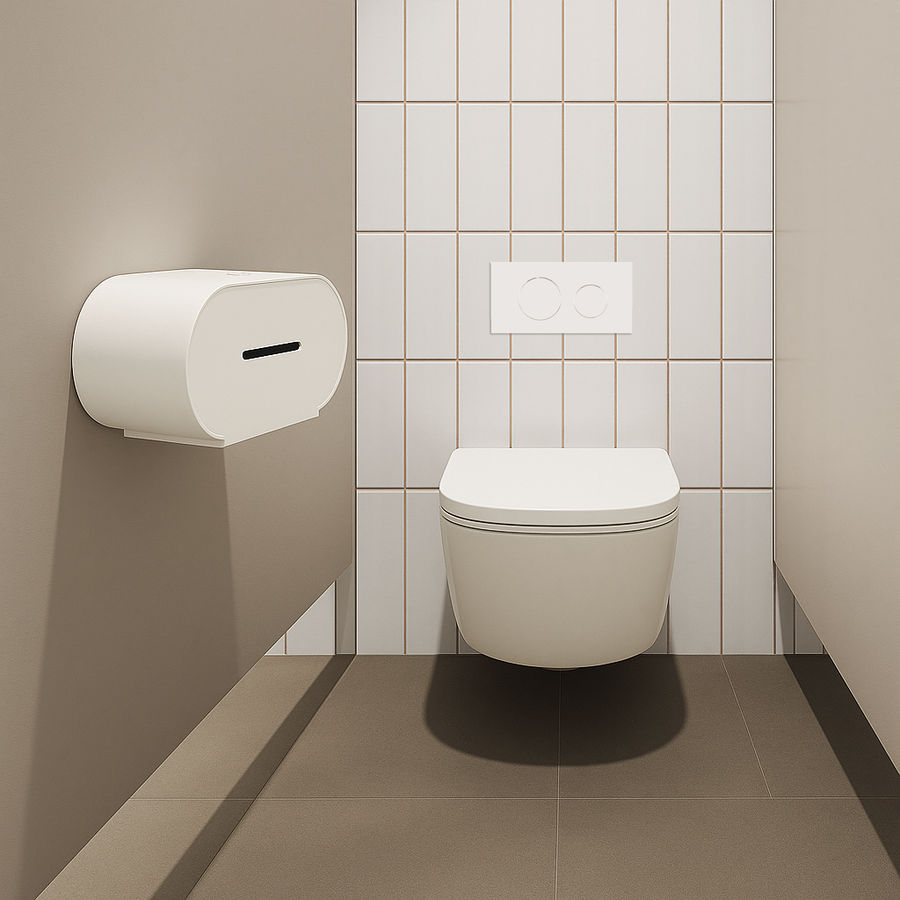
Dan Dryer is a Danish manufacturer specializing in coordinated commercial-bathroom families. The brand's distinguishing move is treating the dispenser line as integrated industrial design rather than an assemblage of accessories. Hand dryer, soap dispenser, sanitizer dispenser, paper towel dispenser, toilet roll holder, and waste bin are designed as a single visual system within each collection.
Three collections sit at the centre of the Dan Dryer offer:
Bjork. The original design family, recognized internationally including a Red Dot Design Award. Bjork pieces share unbroken lines and a slender, almost weightless profile. The hand dryer reads as a sculptural element rather than a piece of equipment, and the dispensers carry the same language. Bjork is the right specification when the washroom design wants the bathware to participate, not recede.
LOKI. A more recent line, awarded the Red Dot Design Award 2021 and selected as German Design Winner 2021 in the Bath and Wellness category. LOKI uses a shared front-plate detail across the collection, which both signals quantity remaining (towels, soap) and ties the pieces together visually. LOKI is ADA-compliant and adheres to accessibility requirements for wheelchair users and children, which makes it a strong choice when a project needs design quality and barrier-free performance from the same line.
Stainless. The classic line, executed in stainless steel rather than the powder-coated finishes of Bjork and LOKI. Specify Stainless when the project's material language is restrained metallic rather than colour-driven, or when stainless is required for hygiene or marine-environment reasons.
Across all three families, Dan Dryer offers the integrated air–water–soap fixture concept: hand dryer, faucet, and soap dispenser configured as a coordinated three-piece tap unit. This is the answer to the touchless-handwashing-station problem in airports, healthcare, and high-traffic hospitality without sacrificing the visual coherence of the rest of the washroom.
Finish range is one of Dan Dryer's specification strengths. Powder-coated pieces are available in the full RAL Classic palette in either matte or gloss, alongside standard black (RAL 9005) and gloss white (RAL 9003). Stainless options are brushed or vibration-finished. For more on the powder-coat process and how RAL palettes get applied to architectural hardware, see Hardware Finishes Part Three.
When should I specify d line over standard commercial faucets?
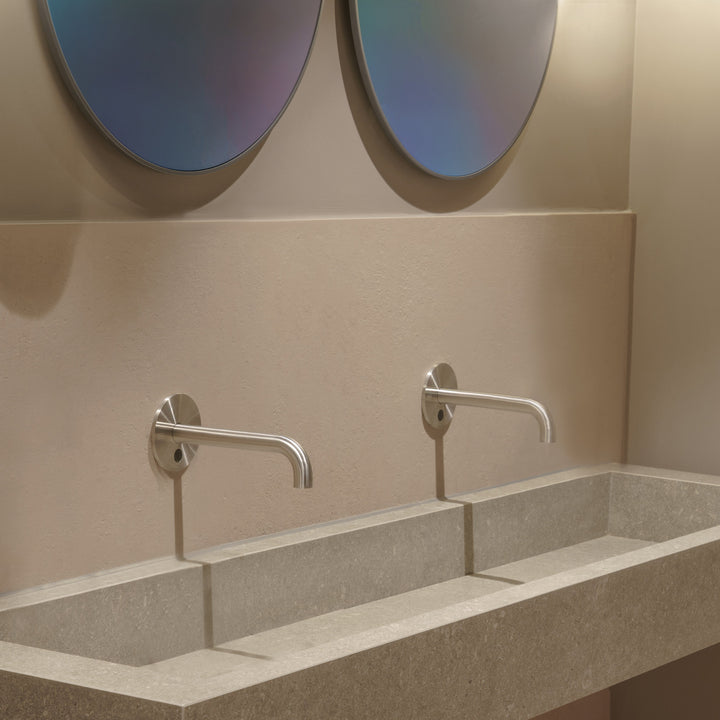
d line is a Danish manufacturer with a tight catalogue and a singular aesthetic position. The brand began as a door-hardware system designed by Knud Holscher in 1971 and has extended into bathware while preserving the same minimalist language across every piece.
Specify d line when the project's design ambition is reduction — when the goal is hardware that disappears into clean geometry rather than asserting itself. The catalogue is small by commercial-supplier standards: Knud (the door and bathware accessories family) and Qtoo (the tap and shower family). That tightness is the point. d line does not offer twelve faucet styles; it offers one design position, executed across the categories where it belongs.
Two specification realities follow from the d line approach:
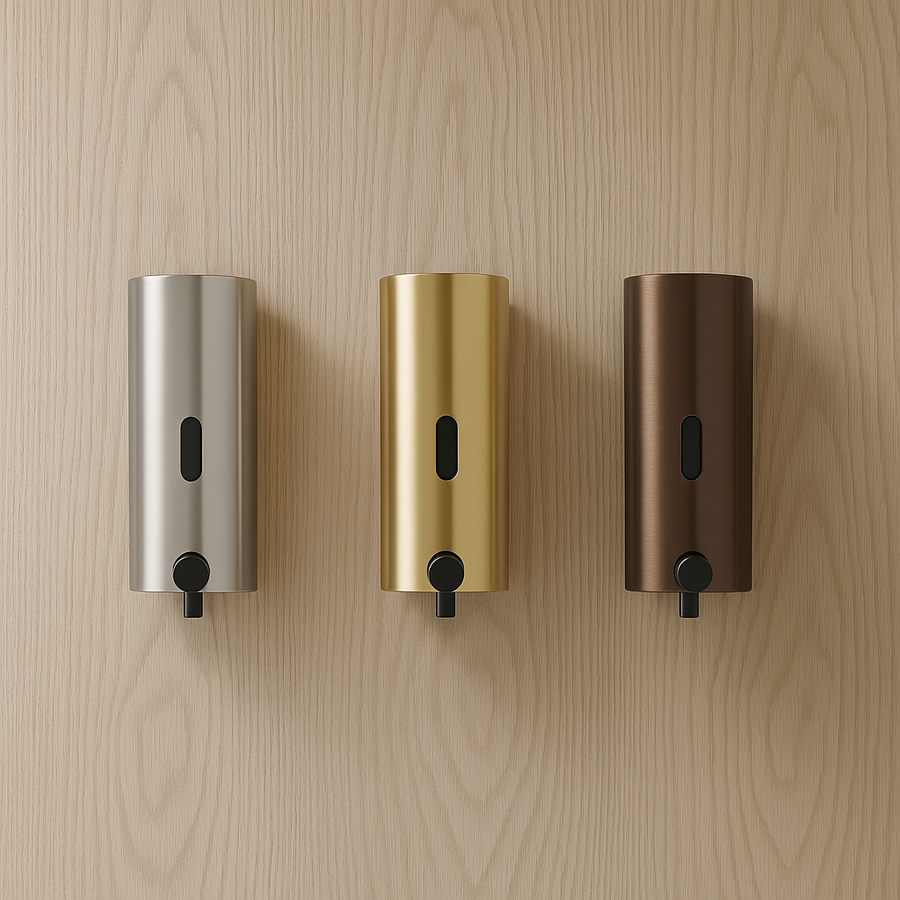
Marine-grade 316 stainless steel construction. All d line bathware is made from grade 316 stainless, which contains 2–3% molybdenum and resists chloride corrosion in ways that grade 304 cannot. This makes d line the right specification for coastal projects, hospitality bathrooms with daily aggressive cleaning, pool environments, and any commercial application where finish integrity over a 20-year service life matters more than initial cost. For the underlying material science, see The Story of Stainless Steel.
Designed by architects, specified by architects. d line's catalogue is a curated set of pieces by named designers (Knud Holscher across most of the historic line, with later additions by other Danish and international designers). The pieces are recognizable; specifiers reach for them when the project wants hardware that reads as architectural rather than transactional.
The Qtoo tap family in particular has become a signature for the brand — single-hole and wall-mounted faucets in the same minimal language, available with thermostatic and touchless options for commercial use. For a deeper read on Qtoo specifically and how the family sits within a project, see Qtoo (d line).
How does HEWI handle accessibility without making spaces look institutional?
HEWI is a German manufacturer of commercial sanitary systems and barrier-free hardware, specified across hospitals, hotels, schools, and accessible residential projects. The brand's distinguishing characteristic is depth — both the depth of the product range and the depth of the finish and configuration options within each product family.
HEWI's commercial bathware sits in two ranges that work together as a single system:
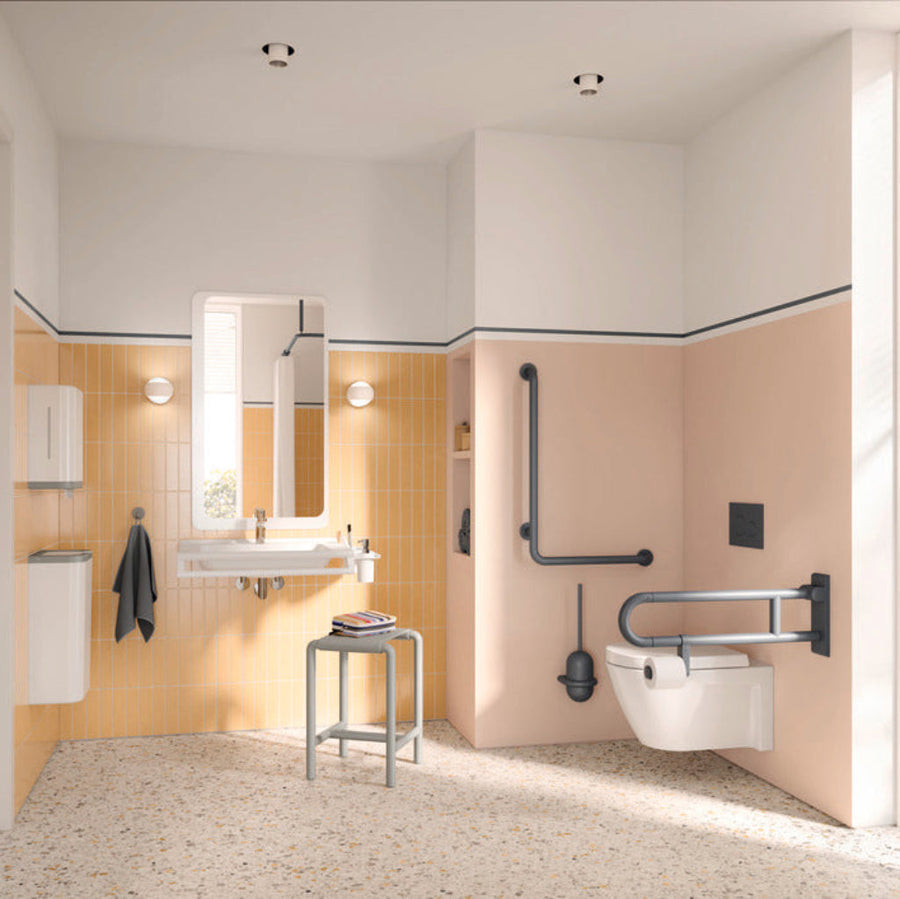
Range 477/801. The polyamide range. High-quality plastic over a steel core, available in HEWI's full colour chart in either high-gloss or matte finish. The high-gloss palette includes Pure White, Signal White, Light Grey, Stone Grey, Anthracite Grey, Jet Black, Sand, Umber, Apple Green, May Green, Aqua Blue, Steel Blue, Coral, Ruby Red, Orange, and Mustard Yellow. The matte palette is restrained to neutral whites and greys for projects that want the velvet finish without the colour. Range 477 covers the full sanitary set — grab bars, shower seats, toilet brushes, hooks, paper holders, soap dispensers, shelves — all coordinated.
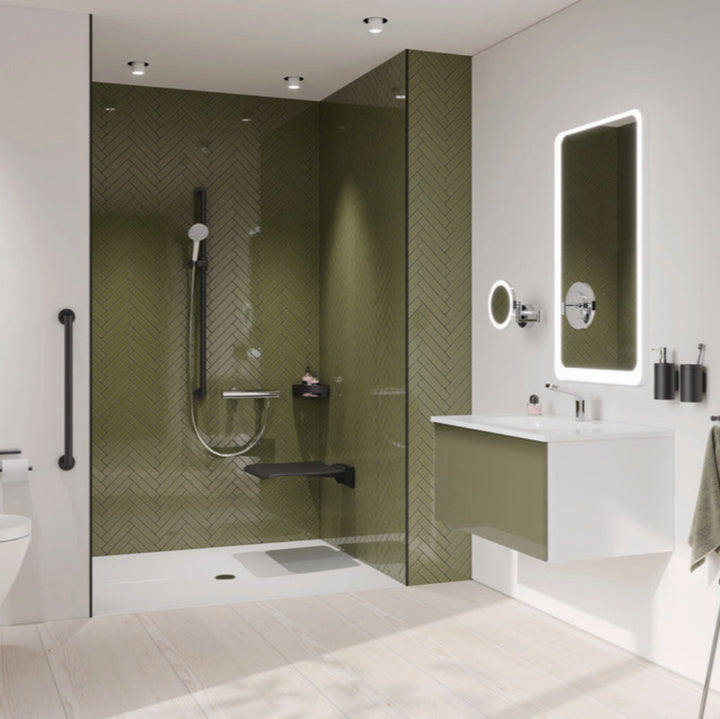
Range 900. The stainless steel range. Includes ADA-compliant grab bars, hinged support rails, shower rails with magnetic shower-head holders, and hinged seats. Specify Range 900 when the project's material language calls for stainless rather than colour, or when matching other stainless hardware in the building.
The reason HEWI matters editorially — beyond the accessibility credentials — is what the colour palette enables. High-contrast specification is a real accessibility requirement: visually impaired users navigate space partly through colour contrast between fixture and wall. HEWI's palette lets a specifier meet that requirement with intent rather than compromise. A coral grab bar against a pure-white wall is both higher-contrast than a stainless bar and a deliberate design choice. The result is accessibility that reads as architecture, not as medical equipment.
HEWI's depth extends past colour. The brand offers antimicrobial versions for healthcare environments (the active+ specification), suicide-resistant configurations for behavioural health settings, and grab bars rated to support loads up to 300 kg for bariatric applications. A single project can coordinate door hardware, cabinet hardware, sanitary accessories, and accessibility hardware from HEWI alone — which is part of why the brand is specified so consistently across hospitals and hotels in Europe.
For ADA mounting heights and code requirements, verify current local code with the project team. Federal ADA standards in the United States and provincial accessibility codes in Canada both apply, and they update.
How do I coordinate across all three brands in a single project?
The three brands are designed to coexist. They share a Northern European design sensibility — restrained, material-honest, designer-led — and they specify cleanly alongside each other when the project calls for more than one of them.
Two coordination questions tend to come up at specification:
Finish coordination across mixed metals and powder coats. Dan Dryer's powder-coated RAL palette can match wall colour, contrast it intentionally, or read as a neutral. d line's brushed 316 stainless reads as a warm-grey neutral that sits alongside almost any palette. HEWI's polyamide colours can be specified to match a specific Dan Dryer RAL or to provide an accent, and HEWI's Range 900 stainless coordinates directly with d line. The most common specification across all three is: d line for taps and water-contact, Dan Dryer Bjork or LOKI in a single RAL across the dispenser system, and HEWI Range 477 in either the same RAL or a high-contrast accent for accessibility moments. For more on coordinating powder-coat and stainless finishes across a project, see Hardware Finishes Part One.
Continuity vs. contrast as a design choice. Some projects want the bathware to recede — finishes that match the wall, hardware that reads as neutral architecture. Others want the bathware to participate — accent colours, sculptural fixtures, accessibility elements that double as visual landmarks. The three brands support both approaches without forcing the project into one or the other. A healthcare wayfinding strategy might specify HEWI 477 in Coral at every accessible washroom entry; a hospitality project might specify the entire bathware package in Anthracite Grey RAL across Dan Dryer Bjork and HEWI 477, with d line stainless taps providing the restrained metallic counterpoint.
The institutional defaults solve commercial bathware as a problem. The three brands above solve it as a project.

Leave a comment