





Made in Canada: Hardware, Lighting, and Design from Canadian Studios
Casson was founded in Toronto by two Canadian architects, and the catalogue reflects that origin — not as a national-pride exercise, but because Canadian designers are doing some of the best architectural hardware and lighting work in the world right now. Lighting from Toronto studios is being specified internationally; cabinet hardware fabricated in Ontario is being installed in heritage renovations across North America; barn-door hardware from a Toronto husband-and-wife team has become the reference for the category. This guide is a tour through the Canadian design we carry, and why we keep coming back to it.

Why does Canadian design belong in the conversation?
Until recently, the assumption in serious architectural specification was that the best hardware came from Europe — Italian and Danish manufacturers in particular, with a long history and the manufacturing infrastructure to back it up. That's still partly true, and we carry plenty of European hardware (Formani, d line, HEWI, Dan Dryer) for exactly that reason. But the gap has closed. A generation of Canadian designers trained at OCAD, Humber, the University of Toronto, and the Emily Carr school has started studios that work at the same standard, often using newer materials and manufacturing techniques than the European houses they compete with.
"Canadian designers are creating products equal in quality to what we see from traditional European designers," says Casson co-founder Jane Son. The shift isn't just aesthetic — it's structural. Specifying Canadian-fabricated hardware on a North American project reduces shipping emissions, shortens lead times, and gives the design team direct access to the makers when something needs to change. For Casson specifically, it also means we can carry pieces that simply aren't available through international distribution channels.
Which Canadian designers does Casson carry?
The studios below are the Canadian makers we work with most often. Each has a distinct point of view, and most are small enough that the work is genuinely hand-finished — which is why they show up in projects where a generic spec wouldn't.
Anony
Lighting studio founded in Toronto by Christian Lo and David Ryan in 2015, after both founders graduated from OCAD and Humber. Anony has become one of the most recognized Canadian lighting brands internationally, with fixtures that combine contemporary form with deeply considered engineering — magnetic shade systems, integrated touch controls, and faceted construction that allows every component to be replaced rather than discarded. The studio releases roughly one fixture a year; each takes one to two years to develop. Read our interview with Christian Lo for more on the studio's design philosophy.
Browse Anony
Object/Interface
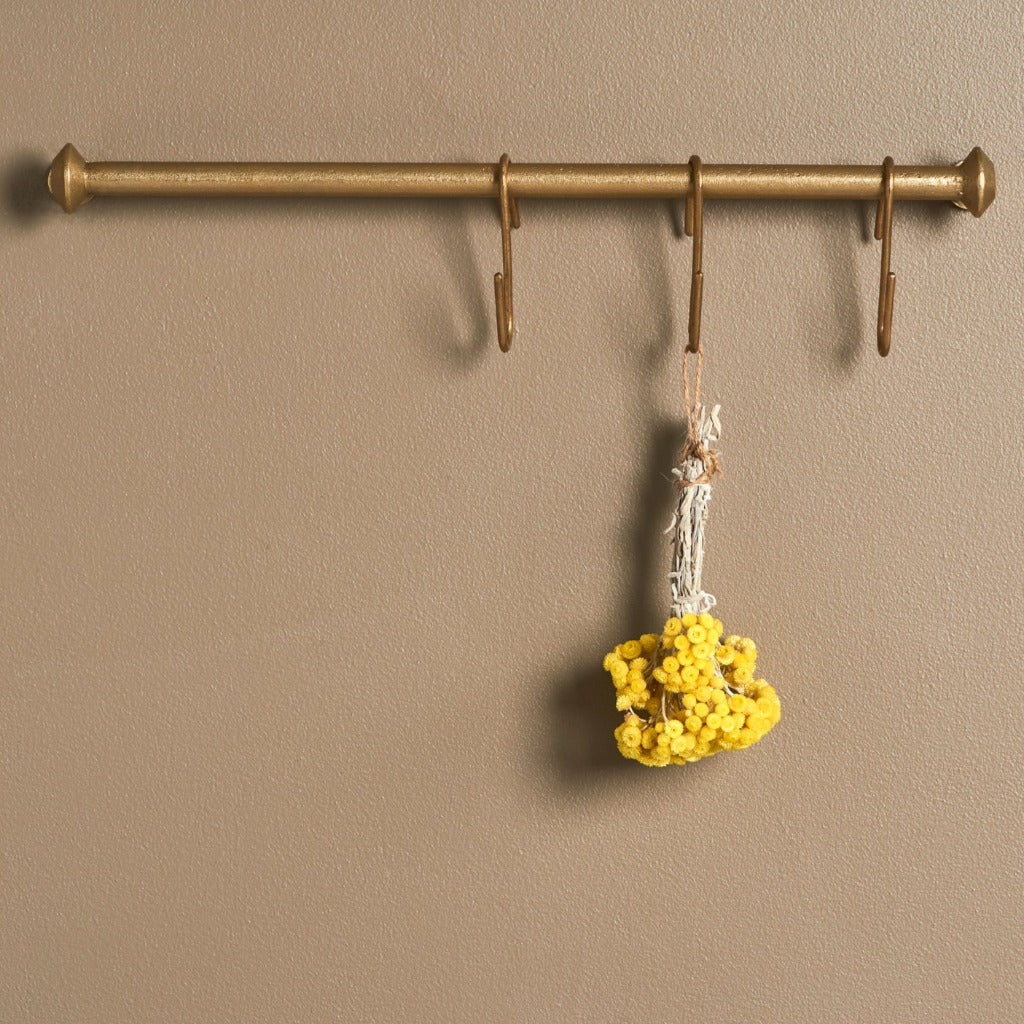
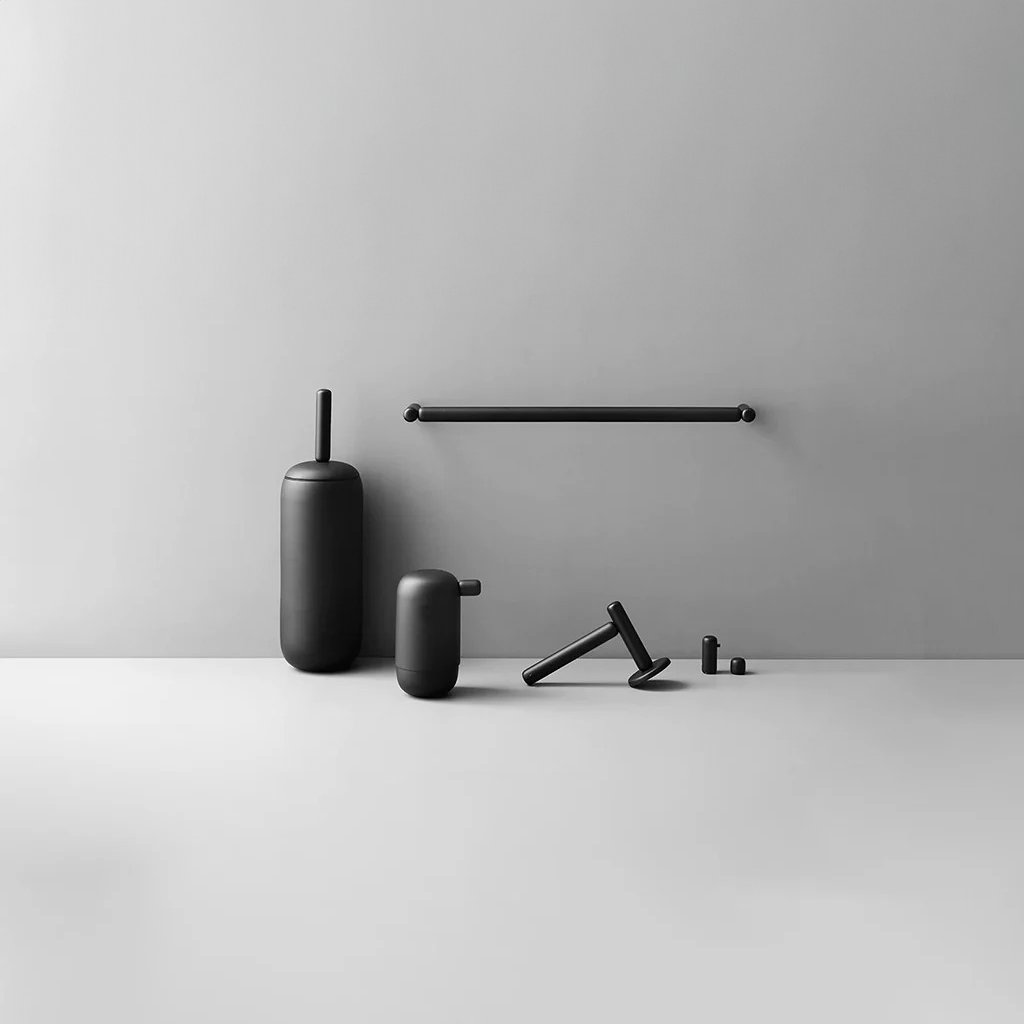
Designer Ryan Taylor's Toronto studio, which began in 2016 with the award-winning Babylon Pendant — a sealed aluminum shade that functions simultaneously as light fixture and planter, holding live plants suspended overhead. The collection has since expanded to wall hooks, shelving, and lamps, all working from Taylor's principle that product design should enhance the world it lives in. The work has the rigour of industrial design with a quietly poetic edge — a planter you can see the plant in, a hook you'd notice on a wall.
Browse Object/Interface
1925Workbench
A husband-and-wife studio founded by Rock Huynh and My Le Nguyen, based in Toronto. The business started accidentally — the Nguyens were renovating their Bloor Street home and couldn't find barn-door hardware that matched their standards, so they made it themselves. The hardware sold quickly; the business grew. 1925Workbench now manufactures barn-door hardware, door pulls, and architectural fittings that have become the reference for the category, particularly the Brassy Beau line in unlacquered brass. Made in Canada, hand-finished, and warrantied accordingly.
Browse 1925Workbench
Maha Alavi
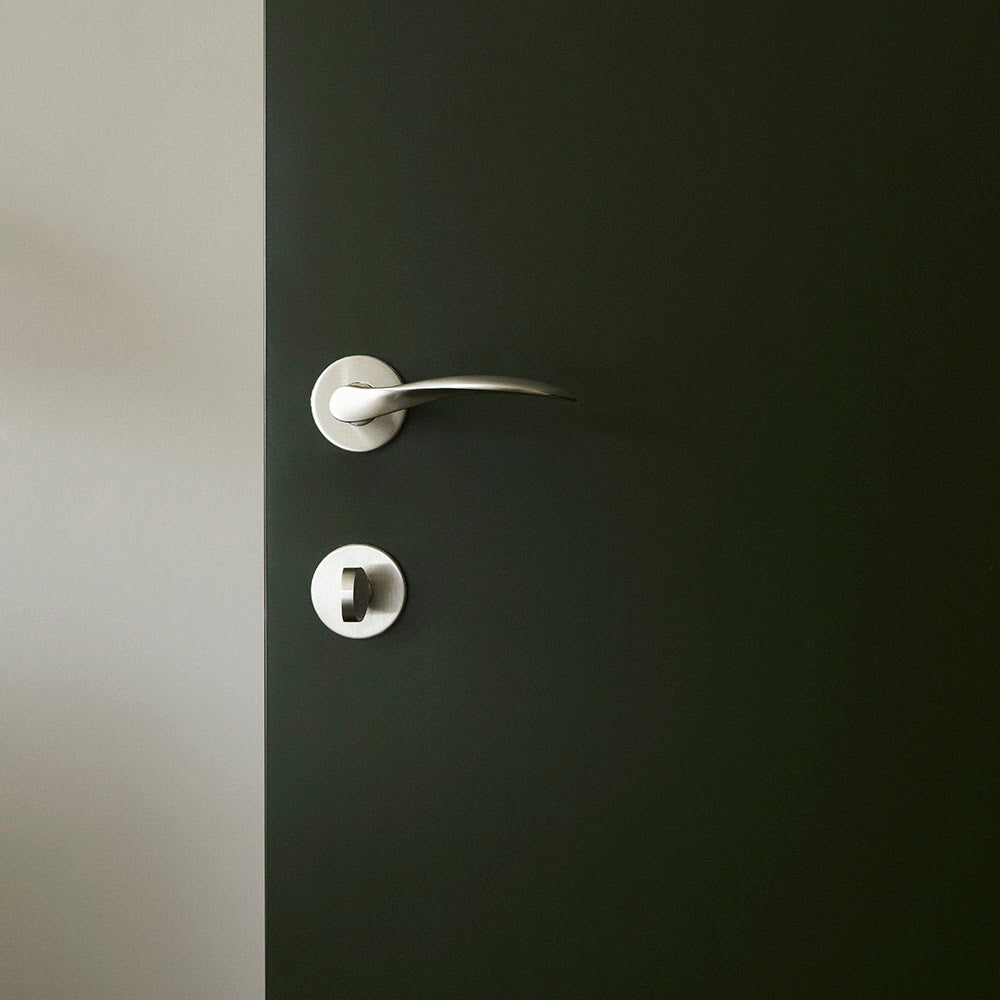
Toronto-based industrial designer with a multi-hyphenate practice spanning hardware, furniture, and exhibition design. Trained in psychology and philosophy before industrial design — a combination that shows in the considered, almost epistemological way she approaches each piece. Alavi's hardware lines (Cercle, Fauna, Oval Knob) have been featured in AD Germany and IDS, and she's expanded into furniture with the Lithic Chair series. She was also one of Casson's first employees, which gives her work a particularly direct relationship with how it ends up specified. Read our conversation with Maha for more on her process.
Browse Maha Alavi
BOCCI
Vancouver-based design and manufacturing house founded by Omer Arbel — one of the most internationally recognized Canadian design exports of the last two decades. BOCCI's lighting work (the 14, 28, and 73 series) has become collector territory, but their architectural electrical fittings are the part of the catalogue most often specified into residential and commercial projects: flush-mounted outlets, switch plates, and connectors designed as if they're part of the architecture rather than added to it. Each piece is hand-finished in their Vancouver workshop.
Browse BOCCI
Charlie by CBH
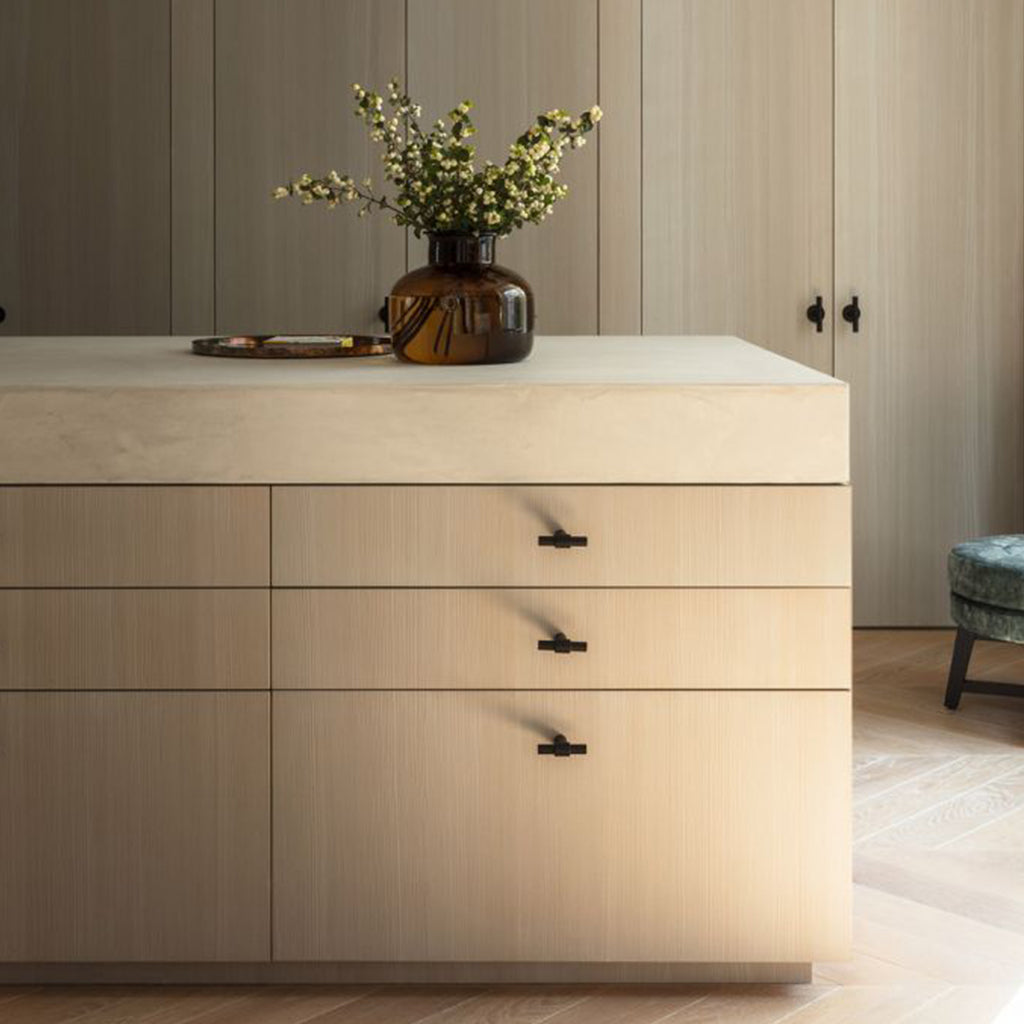
The full architectural hardware collection from CBH (Cabinet Hardware Boutique), designed and fabricated in Toronto. Charlie covers the breadth of an architectural hardware program — cabinet pulls, door levers, hooks, grab bars, flush pulls, edge tabs — all working from the same design language so they coordinate across an entire project. The collection is fully customizable: pieces are made to order in custom lengths, and CBH offers custom finishes on request, including antimicrobial coatings for healthcare and hospitality work. Made in Canada throughout.
Browse Charlie
Why specify Canadian-made hardware?
Three reasons that matter on real projects.
Reduced supply chain risk. Canadian-fabricated hardware doesn't ship overseas, doesn't pass through customs, doesn't get delayed by international freight disruptions. For a project on a deadline, the difference between a four-week and twelve-week lead time often matters more than the difference between two finishes.
Lower carbon footprint. Locally fabricated hardware avoids the shipping emissions of equivalent European or Asian-manufactured pieces. For projects pursuing LEED, WELL, or other sustainability certifications, this counts measurably toward materials credits — and for projects that aren't formally certified, it still aligns with how thoughtful clients increasingly think about specification.
Direct access to the makers. Most of the Canadian studios we work with are small enough that the designers themselves answer their email. Custom finish requests, project-specific modifications, troubleshooting on installation — all of it happens directly with the people who designed the piece. That's not possible at the scale of a European hardware giant, however good their work is.
Where to start
For lighting, Anony for contemporary architectural work, Object/Interface for sculptural one-piece moments, and BOCCI when the project warrants it. For cabinet and door hardware, Charlie by CBH for cohesive multi-room programs, Maha Alavi for sculpted standalone pieces, and 1925Workbench specifically for barn-door installations. For electrical fittings, BOCCI's 22 system is unmatched.
Browse the full Canadian Design collection, or get in touch about specifying for a project.
Leave a comment