





Hardware Finishes: Living Finishes
Unlacquered Brass — A Canadian Source Guide
Unlacquered brass is solid brass that hasn't been coated, sealed, or plated. The bare metal is exposed to air and use, and it develops a patina over time — a darker, warmer finish that deepens across years and reflects how the piece has been handled. It's the finish behind the look most people associate with heritage homes, weathered farmhouses, and the kind of cabinet hardware that ages into character rather than wearing out of it. This is a guide to what unlacquered brass actually is, how to care for it, and — for readers in Canada — where to source it from makers worth knowing.
What is unlacquered brass?
Unlacquered brass is solid brass left bare. No clear-coat lacquer, no nickel or chrome plating, no PVD coating, no protective seal of any kind. The metal you can see is the metal the piece is made from, all the way through.
That matters because bare brass reacts with the air around it. Oxygen and moisture form a thin oxide layer on the surface, which darkens the metal and gives it the warm, deepened tone that distinguishes aged brass from factory-new brass. The reaction is slow and progressive: a new piece is bright and golden when it ships, deepens visibly over the first year, and reaches a stable patina somewhere between three and five years out. From there it continues to evolve, but more subtly.
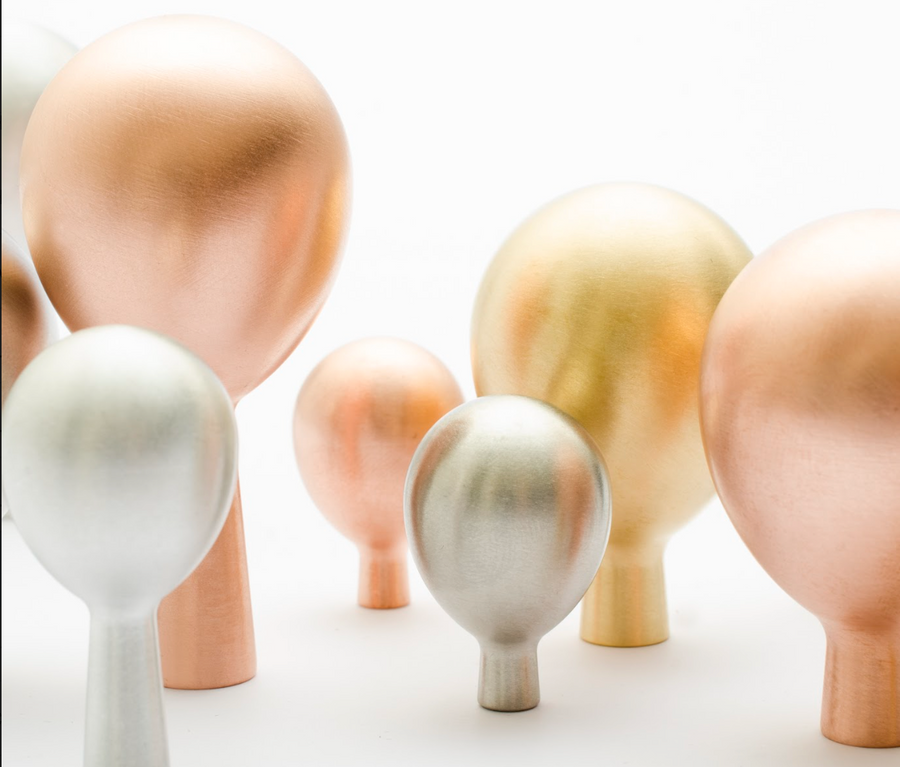
Other terms describe the same thing — raw brass, uncoated brass, natural brass, and living finish all refer to bare brass that's allowed to age. The same logic applies to copper and bronze, which are also sold as living finishes and behave the same way: bare metal, slow oxidation, gradual deepening.
For the underlying patina chemistry — how the oxide layer forms, why it stabilizes, and how oil-rubbed bronze relates to true unlacquered brass — see What Is a Living Finish?. The article below covers what most readers need: how unlacquered brass behaves in use, how to care for it, and where to buy it in Canada.
What's the difference between unlacquered brass and lacquered brass?
Lacquered brass has a clear protective coating that prevents the bare metal from reacting with air. The coating holds the original colour and brightness for as long as it lasts — typically several years before it wears at high-touch points and needs reapplying. Unlacquered brass has no coating, so the colour starts changing the moment the piece is installed.
Plated finishes (chrome, nickel, PVD) behave more like lacquer than like unlacquered brass: they hold a fixed appearance until the plating wears, at which point the underlying base metal shows through. Unlacquered brass skips the coating step entirely, which is what allows the patina to develop and what makes the piece restorable to brightness if the patina isn't wanted.
Neither approach is better. They answer different questions. Specify lacquer or PVD when consistency across a long install matters more than character — commercial spaces, kitchens with frequent aggressive cleaning, projects where the design wants the hardware to recede into a fixed appearance. Specify unlacquered brass when you want the hardware to age with the space.
What does unlacquered brass look like over time?
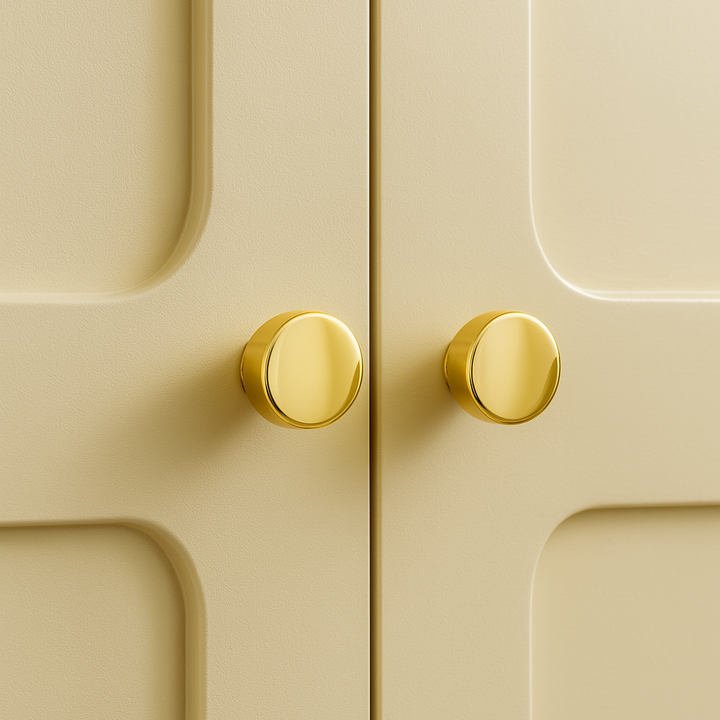
New unlacquered brass is bright and golden. The first six months bring small changes — slight darkening at edges, a softening of the initial mirror brightness if the piece is polished. By the end of the first year, the colour has visibly deepened toward a warmer, more amber tone. Between years one and three, the patina develops unevenness: high-touch points (knob faces, lever pads, the centre of a pull) stay brighter from the polishing effect of skin contact, while protected areas darken further. By year three to five, the piece has reached its mature patina — visibly aged, with depth and tonal variation across the surface.
That unevenness is part of the appeal. A factory finish is uniform by design; a living finish records use. A doorknob handled mostly from one side darkens differently from one handled from both. A cabinet pull on a kitchen drawer that opens twenty times a day patinas faster than one on a guest bedroom dresser. The hardware ends up looking like the space it's in.
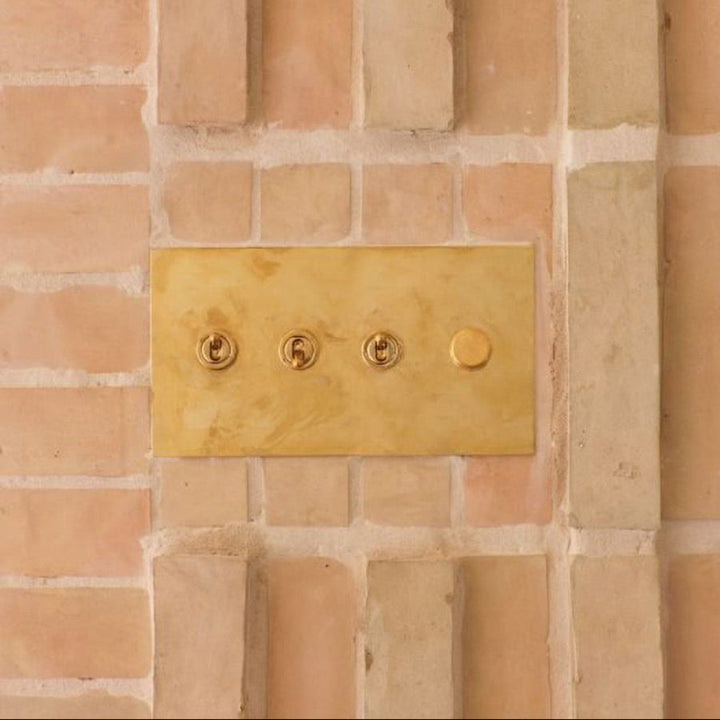
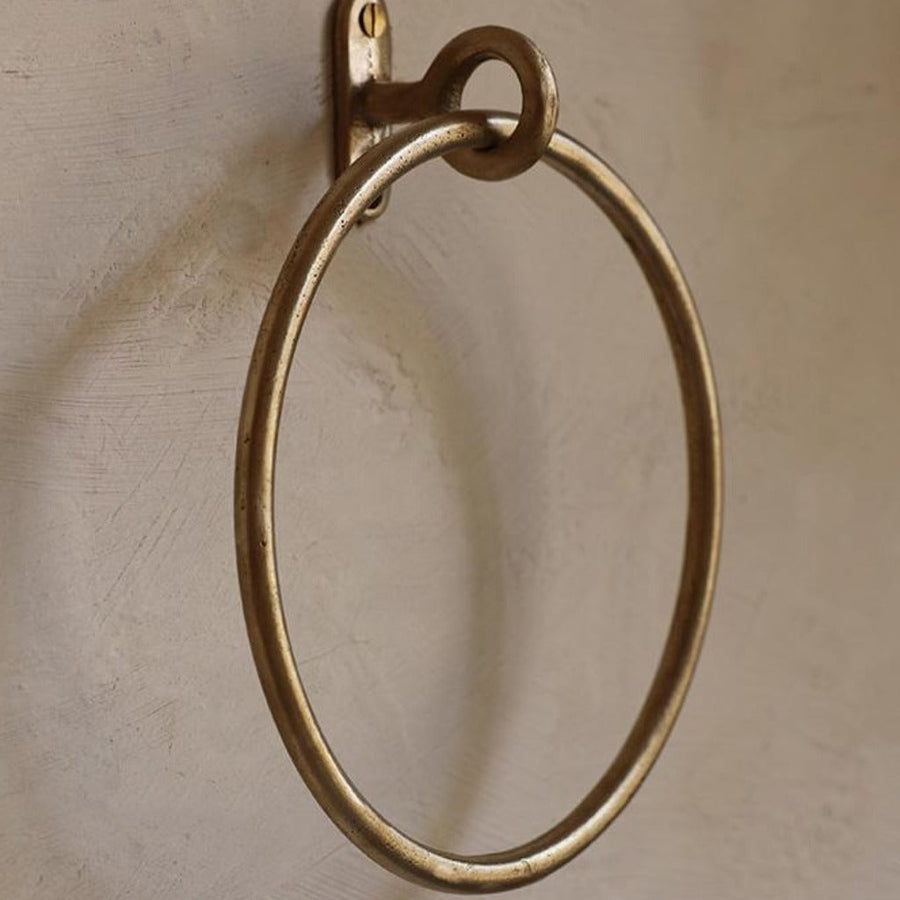
Sand-cast brass — pieces with a textured surface from the casting mould rather than a polished finish — develops uneven patina even more visibly, because the high points polish through use while the low points hold their darker tone. Polished brass starts as a mirror and softens into a warmer, more lived-in glow over the same timeline.
Where can I buy unlacquered brass cabinet hardware in Canada?
Through specialty hardware retailers that curate European and Canadian makers. Casson Hardware, based in Toronto, carries the broadest selection in the country: Vervloet from Belgium, Mi & Gei and Spaces Within from Sweden, Baccman & Berglund also from Sweden, Object/Interface and Chapman & Bose from Canada, and CBH (the in-house Charlie line) fabricated for Casson. Each maker occupies a distinct position in the unlacquered-brass landscape, and the right specification depends on what the project is asking the hardware to do.
The mass retailers — CB2, Rejuvenation, the big-box stores — carry a thinner selection of mostly own-brand pieces in unlacquered finishes. They serve the entry point of the market well. The makers below serve projects where the hardware is meant to participate in the design rather than disappear into it.
What's the difference between heritage and contemporary unlacquered brass?
Heritage brands carry a hundred-plus years of foundry work, intricate detailing, and a recognizable design language rooted in European craft tradition. Contemporary brands are designer-led — newer studios using the same solid-brass material with a modern formal vocabulary. Both are valid; they answer different design questions about how much explicit historical weight a project wants its hardware to carry.
The heritage end of the spectrum is anchored by Vervloet, a Belgian manufacturer crafting decorative hardware in solid brass and bronze since 1905. The catalogue runs to door handles, levers, knobs, and accessories defined by hand-finishing and the kind of sculptural detail that takes a foundry generations to develop. Vervloet pieces — the Audrey Knob, the Jules Hook, the Rene Knob, the Jules Door Lever — are specified by name when a project wants hardware with explicit historical weight. Pricing is customizable per project; lead times reflect made-to-order Belgian fabrication.
The contemporary end is anchored by three Scandinavian studios working in similar material with different aesthetic positions:
Mi & Gei is a contemporary cast-brass line. Casson stocks the Forme series — numbered cabinet pulls, drawer knobs, towel bars, hooks, and bath accessories — in five finishes including Natural Brass (the unlacquered option), Bronze (an oxidizing dip that produces a darker tone but remains a living finish), Carbon Black, Satin Nickel, and the lacquered alternatives. Mi & Gei's Forme No. 22 and No. 23 cabinet pulls are among Casson's most-specified unlacquered pieces. The brand also offers a 14-swatch material kit for designers and architects working through finish selection across multiple projects.
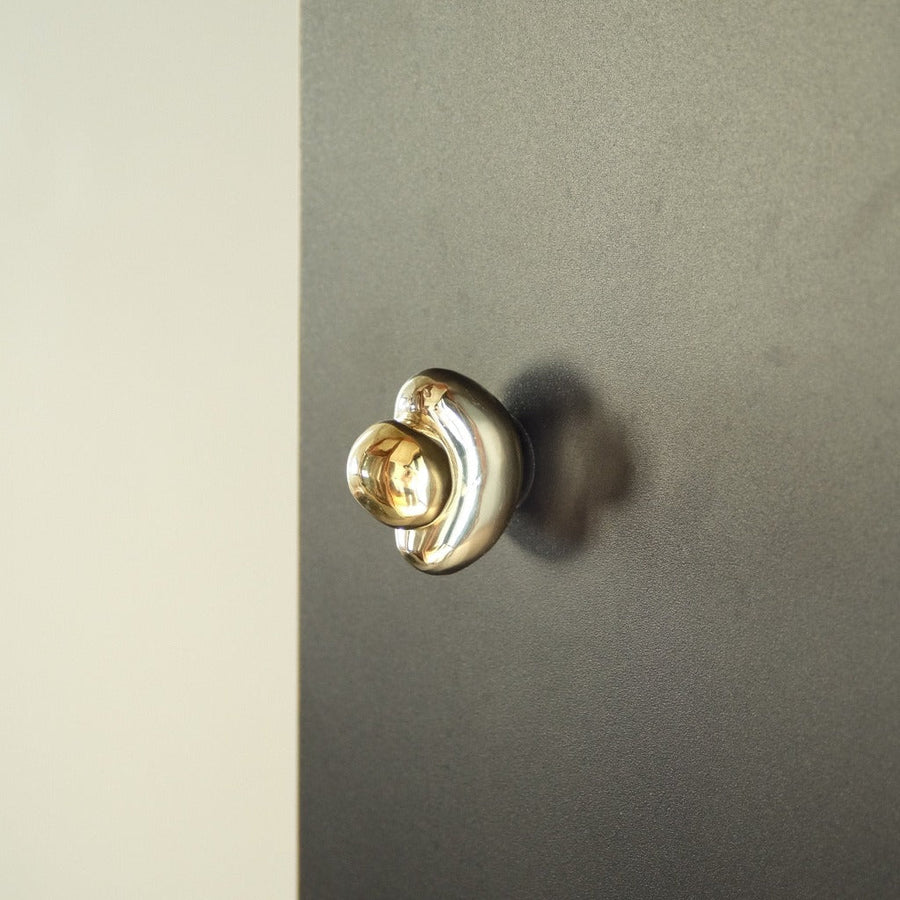
Spaces Within is a Stockholm-based studio producing sculptural solid-brass cabinet hardware, cast at a second-generation foundry in Florence. The pieces lean toward the ornamental — sensual forms, rich textures, jewelry-like detailing. Specify Spaces Within when the project wants cabinet hardware that reads as object more than fixture, where each piece is the visual event rather than the connective tissue.
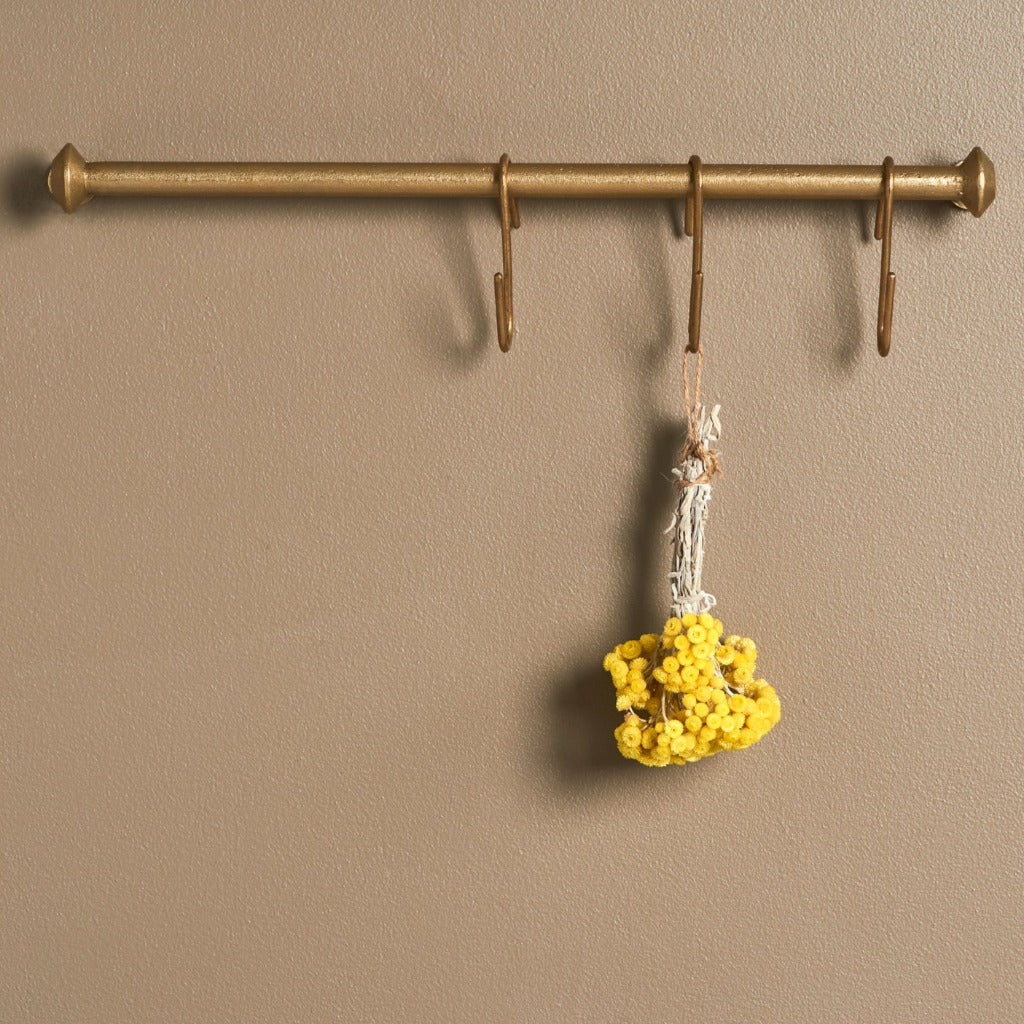
Baccman & Berglund is also Swedish — a smaller catalogue of hooks and knobs in solid brass, including the Kokeshi series and the Dot collection. The pieces are more graphic and architectural than the Spaces Within work — closer in feel to Mi & Gei but with a distinct formal language. Reasonable price point for solid-brass European hardware.
None of the contemporary brands compete with Vervloet on heritage; none of them try to. They occupy different points on the same axis.
Which Canadian makers produce unlacquered brass cabinet hardware?
Three makers worth specifying, all carried by Casson:
Chapman & Bose is a Toronto studio working in solid brass, vegetable-tanned leather, and stainless steel. The Mineral Leather Wrapped Metal Appliance Pull — a substantial bar pull with a hand-stitched leather wrap over a solid-brass core — is the studio's most distinctive piece, designed for integrated refrigerators, dishwasher panels, and tall pantry doors. The brass is unlacquered; the leather develops its own patina alongside it. Chapman & Bose pieces ship from Toronto, which makes lead times predictable and cross-border duty irrelevant.
Object/Interface produces architectural hardware and integrated systems with a Canadian design sensibility. The Brass Rail Shelving system is the studio's largest expression — solid brass rails for shelving, towel bars, and integrated kitchen and bath assemblies — but the studio also produces smaller cabinet hardware and accessories in unlacquered brass. Specify Object/Interface when the project wants Canadian-made solid brass with a more architectural-system orientation than the discrete-piece approach of Mi & Gei or Spaces Within.
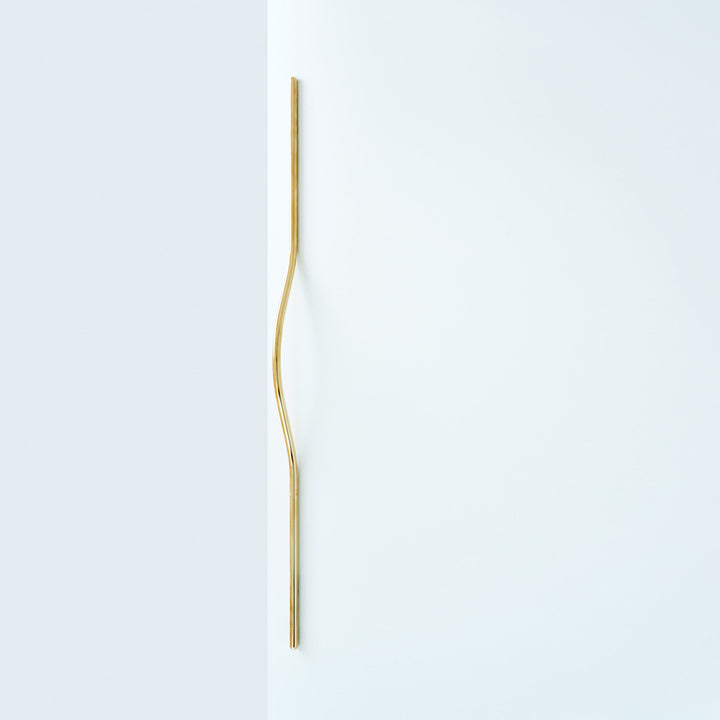
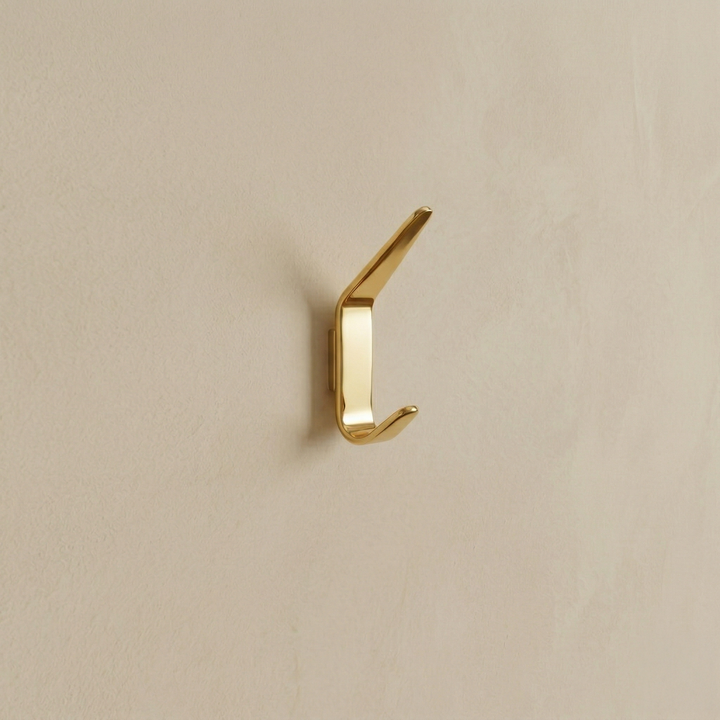
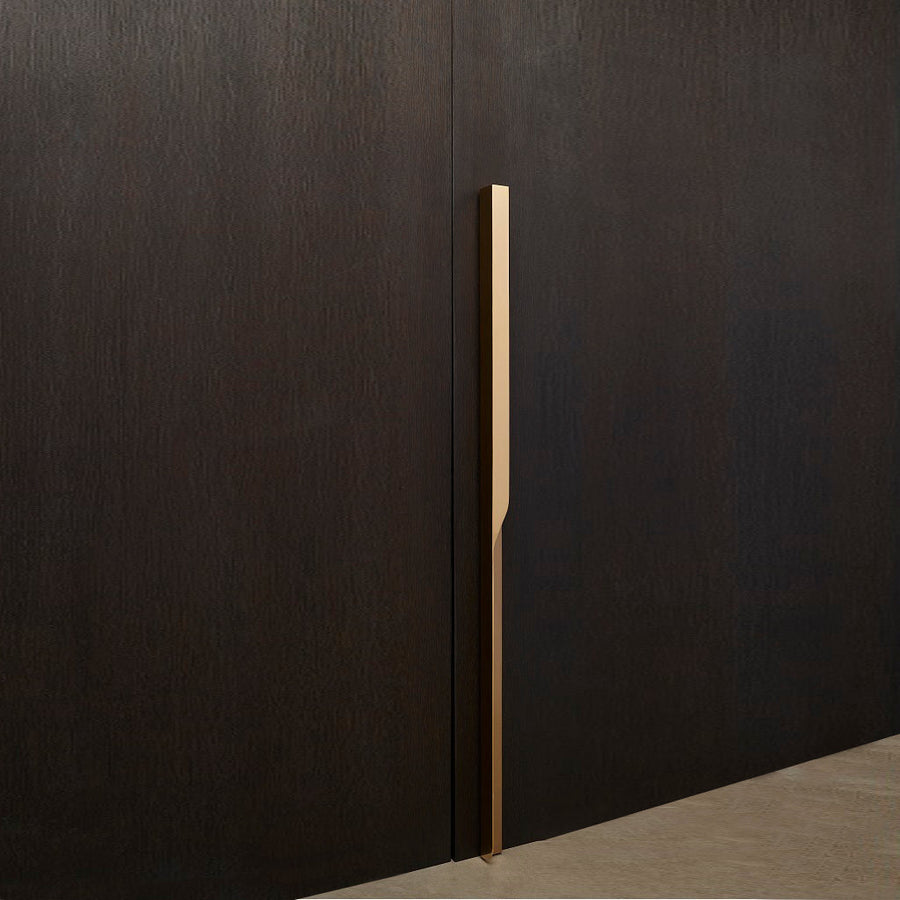
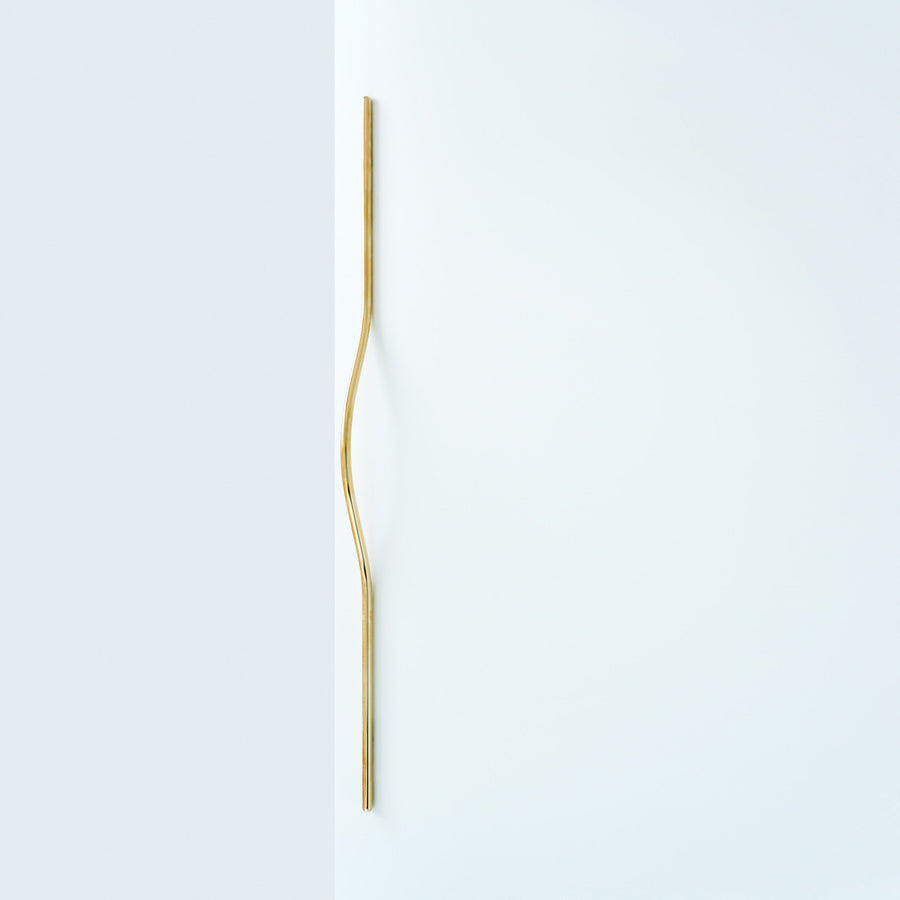
CBH (the Charlie line) is fabricated in-house for Casson. Most Charlie pieces are lacquered by default, but unlacquered brass options can be specified at order — including the Charlie Round Hook, several pulls, and the Pulse Line Handle, which is a Casson exclusive in unlacquered brushed or polished brass. CBH is the right specification when the project wants Canadian-made cabinet, door, and wall hardware coordinated across categories from a single source.
The Canadian-made angle matters for several practical reasons beyond the editorial position. Lead times are shorter than European brands; pricing avoids cross-border duty; and Casson's relationship with the studios means custom variants and finish requests are workable on most projects. For a broader read on Canadian design at Casson, see Made in Canada: Hardware, Lighting, and Design from Canadian Studios.
How do I specify unlacquered brass for a project?
Three practical realities shape unlacquered brass specification: lead time, sample protocol, and finish coordination.
Lead time. European-made unlacquered brass is rarely stocked in depth in Canada — most pieces are made to order at the manufacturer and shipped from Europe. Vervloet pieces typically run six to twelve weeks from order to delivery; Mi & Gei's Forme series is generally stocked at Casson and ships faster, but custom finishes or large-quantity orders extend the timeline. Spaces Within and Baccman & Berglund run six to ten weeks for typical orders. Canadian-made pieces — Chapman & Bose, Object/Interface, CBH — are faster, often two to four weeks for stocked items. Build the lead time into the project schedule early; specifying unlacquered brass three weeks before installation is rarely workable for European brands.
Sample protocol. Unlacquered brass varies in starting tone (warmer or cooler depending on alloy and casting), in surface texture (smoother on machined pieces, more variable on sand-cast), and in patina trajectory (Mi & Gei's Bronze finish ages differently than Vervloet's Natural Brass). For any project where the hardware is specified across multiple rooms, order finish samples first. Mi & Gei's 14-swatch material kit and Charlie's finish samples are designed for this — they let the design team and the client see the finish in the actual lighting of the space before committing to a full hardware order.
Finish coordination. Unlacquered brass coordinates well with most other unlacquered finishes — copper, bronze, raw stainless — because all of them are aging in parallel. It coordinates less easily with lacquered or PVD-coated finishes, which hold a fixed appearance while the brass darkens. The mismatch is most visible at the five-year mark, when the brass has visibly aged and the lacquered hardware still looks new. For projects mixing finishes, decide early whether you want the contrast (unlacquered as accent against fixed-finish dominant) or whether you want everything to age together (unlacquered throughout, accepting that the appearance changes). For finish coordination guidance more broadly, see Hardware Finishes Part One.
How do I care for unlacquered brass once it's installed?
Routine care is a soft dry cloth. Wipe occasionally to remove dust and fingerprints; the patina will continue developing underneath. That's the full daily-care answer for unlacquered brass cabinet hardware.
If a piece is dirty, warm water and mild soap on a soft cloth, dried immediately, is enough. Avoid abrasive cleaners, polish, anything labelled for brass, and general kitchen and bathroom cleaners — most contain ingredients that strip patina or react unpredictably with bare metal. Acidic cleaners (vinegar, citrus, descaler) and ammonia-based products are particularly aggressive and can leave irregular marks where they sit.
Hardware in high-contact positions — the knob you grab a hundred times a day, the pull on the most-used kitchen drawer — develops uneven patina because oils from skin and friction polish high points back to brightness. That's the expected behaviour, not a problem. The unevenness is what gives unlacquered brass its depth.
If the patina develops in a direction you don't want — too dark, uneven in a way that bothers you, marked by a cleaning product that shouldn't have been used — the piece can be restored. A standard metal polish (Wright's, Brasso, or any reputable brass polishing cream) applied according to the product's instructions will lift the patina and return the bright original surface. The piece then begins the oxidation cycle again from the start. This works because unlacquered brass is solid brass — there's no plating to wear through. Restoring lacquered or plated hardware doesn't work the same way.
For the more detailed discussion of cleaning protocols, oil-rubbed bronze waxing, and accelerated patina techniques, see What Is a Living Finish?.
Why does unlacquered brass cost more, and how should I think about that?
Unlacquered brass is solid brass — typically cast or machined from solid stock rather than plated over a base metal. The cost reflects three things that plated hardware doesn't carry: the raw material weight, the fabrication time (hand-finishing, sand-casting, foundry work), and the design provenance (named-designer attribution at the European brands, hand-stitched assembly at Chapman & Bose).
The cost framing that actually applies for unlacquered brass is the long-term framing. Plated finishes wear — chrome, nickel, and PVD coatings all eventually fail at high-touch points, exposing the base metal underneath, and the only remedy is replacement. A solid unlacquered brass piece, by contrast, doesn't fail; it ages. The patina it develops over twenty years is the piece's most valuable design state, not a degradation of it. If the patina is unwanted at any point, a standard metal polish restores the original brightness and the oxidation cycle begins again.
For a residential project, the math is reasonably simple: unlacquered brass costs more upfront and lasts indefinitely; plated hardware costs less upfront and is replaced once or twice across a renovation cycle. For a commercial project where finish consistency across hundreds of fixtures matters more than longevity per piece, the math runs the other way. The decision is project-specific. The cost difference is real but not the only consideration.
Leave a comment